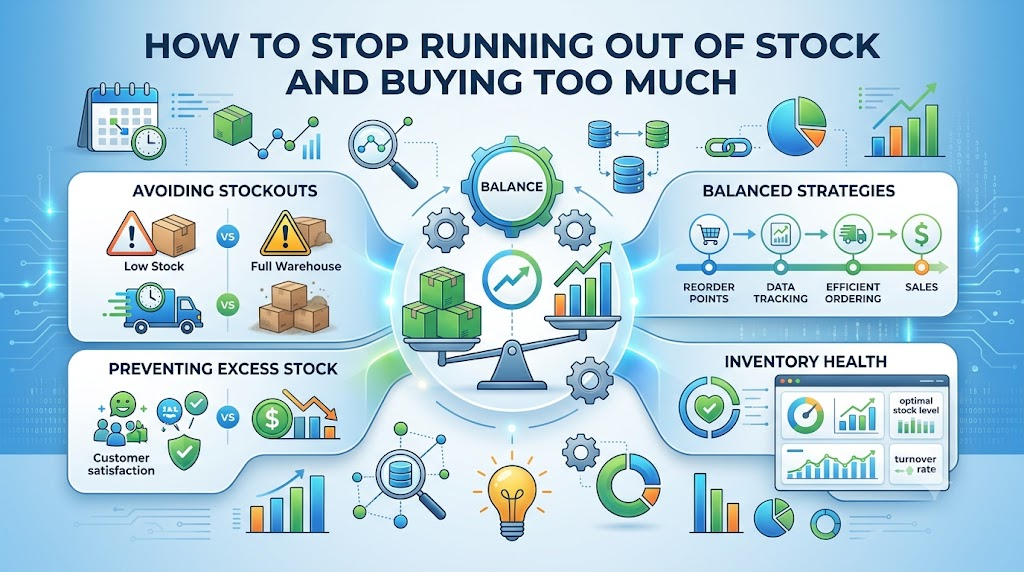
Running a store or factory is like packing your school lunchbox. If you pack too little food, your belly stays empty. If you pack too much, food goes bad and you throw it away. In business, having too little stuff is called a stockout. Having way too much stuff is called overstocking.
Both problems hurt your business. When shelves sit empty, shoppers leave and spend their money elsewhere. But when rooms fill with extra boxes, you waste cash on storage. Let us learn how to keep the right balance every single day.
What Are Stockouts and Overstocking?
A stockout means you run out of items that people want to buy right now. Imagine going to an ice cream shop on a hot day. You ask for chocolate, but the freezer is empty. You walk away sad, and the shop owner loses a sale.
Overstocking is the exact opposite problem. The shop owner buys ten thousand tubs of ice cream, but the shop has only one freezer. The ice cream melts, spoils, and makes a huge mess. The owner throws away money because they bought way too much.
So, good supply chain management keeps your shelves full without piling up extra boxes.
Why Do Businesses Face These Problems?
Most supply chains fail because people make wild guesses instead of checking real facts.
- Bad guesses: Managers guess how much people will buy next month without looking at past numbers.
- Slow suppliers: Sometimes the factory that makes your toys takes weeks longer to ship them.
- Messy counts: Workers count boxes by hand on paper and lose track of the real numbers.
- Panic buying: When one item sells fast, scared managers order way too much of it.
Because these mistakes happen, stores either run out of toys or run out of shelf space.
Step 1: Track Your Numbers with Simple Software
Throw away the old paper notebooks and messy clipboards. Paper gets lost, and people make simple math mistakes.
Instead, use a modern computer tool to count your goods. These tools are called inventory management systems. Every time a cashier scans an item, the computer updates your stock count instantly.
Because the computer updates right away, you always know what sits on your shelves. You never have to guess what you need to order next.
Step 2: Set Safe Reorder Points
You should never wait until your shelves are totally empty to order more goods. Trucks take time to drive to your store.
Set a clear reorder point for every single item you sell. A reorder point is a low-stock alert number. For example, say you sell ten skateboards every day. It takes your supplier three days to bring new skateboards to your door.
So, you must order new skateboards when you have thirty left in your room. This simple rule stops empty shelves before they ever happen.
Step 3: Keep a Small Pillow of Safety Stock
Sometimes life brings big surprises. A big storm might delay delivery trucks, or a sudden video trend might make your toy super famous.
For this reason, you need safety stock. Think of safety stock as a spare tire in the trunk of a car. You do not plan to use it every day. But when a tire pops, that spare tire saves your entire road trip.
Keep a small extra pile of your best-selling items in the back room. This simple safety pillow protects your sales when delivery trucks get stuck in bad traffic.
Step 4: Group Your Products Using the ABC Rule
Not all products bring you the same amount of cash. Smart managers sort their inventory into three simple buckets. This trick is called the ABC method.
- Group A items: These are your top stars that make the most money, so watch them daily.
- Group B items: These sell at a steady, medium pace, so check them once a week.
- Group C items: These are cheap items like rubber bands or stickers, so check them once a month.
When you focus your time on your star items, you save money and keep customers happy.
Step 5: Talk to Your Suppliers Every Week
Never treat your suppliers like strangers. Pick up the phone and talk to them often.
Tell your suppliers about your sales plans ahead of time. If you plan a big summer sale, give your makers early notice. Because you gave them early warning, they can build your items without rushing.
Good teamwork stops sudden delays. When suppliers know your plans, they ship your boxes right on time.
How to Check Your Inventory Health
| Item Check | If You Have Too Little (Stockout) | If You Have Too Much (Overstock) | The Perfect Balance |
|---|---|---|---|
| Customer Mood | Angry and leaves the store | Happy to see items | Very happy and returns often |
| Storage Cost | Zero extra cost | Pays huge money for big rooms | Pays a small, fair price |
| Cash in Hand | Misses out on new sales | Cash is locked in dusty boxes | Cash flows smoothly every day |
| Product Age | Sells out fast | Items get dusty and break | Items stay fresh and new |
Key Steps to Build a Balanced System
- Count your items using bar code scanners, not paper and pencils.
- Find your best-selling items and keep extra safety stock for them.
- Calculate how many days trucks take to reach your warehouse.
- Return slow-moving items to suppliers before they collect dust.
- Run discount sales to clear out boxes that sit too long.
- Review your sales numbers every single week to spot new trends early.
Common Mistakes to Avoid
The biggest mistake is holding onto old stock that nobody wants to buy. If a toy stopped selling six months ago, drop the price and sell it fast. Freeing up that shelf space gives you room for new, hot items.
Another big mistake is trusting only one supplier for your key products. What happens if their factory closes for a week? Your store runs completely dry. Always keep a backup supplier on speed dial so your business never stops moving.
What Did We Learn Today?
Keeping the right amount of stock is not magic. It is just good planning and clear tracking.
First, stop guessing and use smart software to count your products. Next, set reorder points and keep a small cushion of safety stock. Finally, talk to your suppliers so everyone works as one big team.
When you follow these simple steps, your shelves stay full, your costs stay low, and your customers leave with big smiles.

- Fast Clean Streams with TheDataOps.org - September 23, 2026
- How to Stop Running Out of Stock and Buying Too Much - September 21, 2026
- Why Modern Software Teams Win When They Share Helpful Tools - September 21, 2026