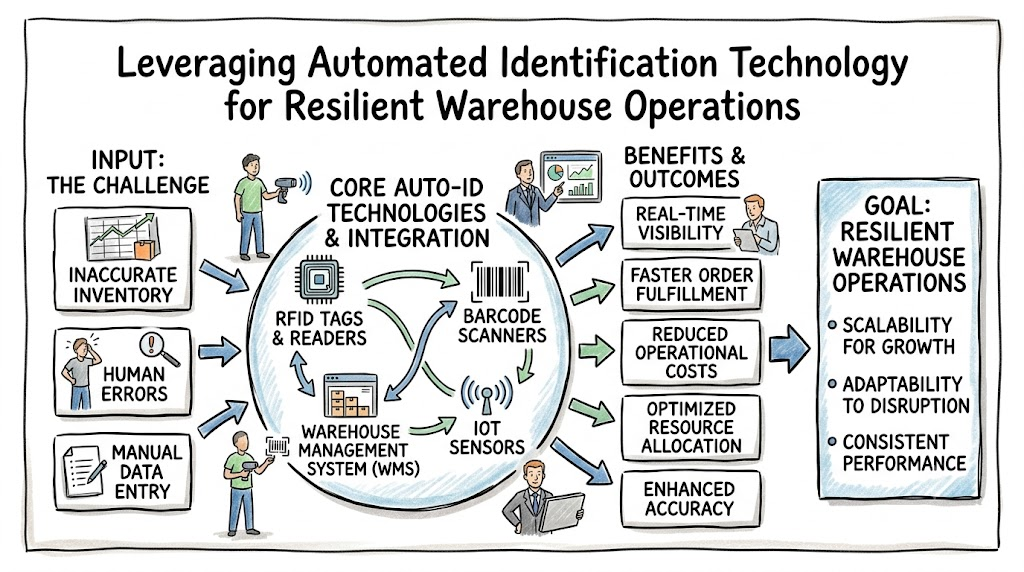
Radio-frequency identification systems have fundamentally transformed how modern enterprises supervise physical stock movement across extensive distribution centers. For this reason, logistics leaders must prioritize digital tracking upgrades to eliminate human counting errors and maintain exceptional fulfillment speed. Adopting wireless tag architectures allows warehouse personnel to scan hundreds of inventory units simultaneously without needing line-of-sight visual access. Consequently, progressive organizations partner with industry specialists like SCMGALAXY to integrate these robust wireless capabilities into their existing enterprise resource planning frameworks.
When evaluating historical stock management methods, warehouse workers dedicated countless labor hours to manual barcode scanning across individual pallets. This outdated approach regularly resulted in stockouts, mislabeled bins, and delayed customer deliveries due to inaccurate paperwork. Transitioning to radio-wave tracking protocols removes these manual touchpoints and provides automated, real-time inventory counts instantly. Because stationary readers and handheld scanners read asset data continuously, operational planners gain immediate insight into localized inventory levels.
Developing an intelligent scanning ecosystem enables enterprise supply networks to pinpoint shrinkage trends and optimize order picking workflows. Once warehouse managers implement automated tagging, they can quickly eliminate misplaced items and accelerate their overall cross-docking operations. In addition, automated cycle counting empowers warehouse teams to resolve quantity discrepancies long before they disrupt order fulfillment schedules. Ultimately, your long-term fulfillment success depends entirely on how quickly and accurately you identify physical goods across your storage footprint.
Defining Automated Identification Systems Within Modern Logistics
To understand this technological shift, you must analyze how wireless electromagnetic fields convey identifying records across physical distribution environments. Radio-frequency tags contain integrated microchips and conductive antennae that store unique product serial numbers and batch details. Unlike standard printed barcodes, these electronic tags communicate with receiving scanners through electromagnetic waves without direct manual alignment. For this reason, distribution facilities can process incoming shipments in minutes rather than spending multiple hours on manual inspections.
As warehouse footprints expand to support complex fulfillment commitments, maintaining item-level transparency becomes a difficult task for operations teams. This operational pressure forces organizations to replace legacy optical labels with resilient electronic tags on cartons, crates, and storage bins. If your tracking system still relies entirely on individual laser scans, inventory throughput will grind to a halt during seasonal peak surges. Therefore, installing wireless sensor arrays at critical intake dock portals has become an essential warehouse standard.
Operating a connected identification infrastructure requires a dependable data middleware platform capable of filtering millions of raw electronic pings. In industrial environments, metal surfaces and liquid containers can occasionally create signal reflections or dead spots that block reader waves. When a pallet moves past warehouse intake portals, specialized software filters duplicate tag transmissions and transmits clean data to the central database. Consequently, modern asset-tracking platforms combine high-performance antennae arrays with advanced filtering logic to ensure reliable stock verification across every staging area.
Why Automated Tracking Determines Inventory Management Success
Your fulfillment software cannot optimize picking operations if your physical warehouse counts fail to reflect actual shelf availability accurately. For retail customers and manufacturing plants, receiving the correct quantities on schedule remains the primary measure of distribution dependability. Therefore, managing warehouses with outdated manual counting methods leads to inventory distortions, cancelled customer orders, and damaged client partnerships. If stock counts fall out of sync with your ordering systems, your distribution network will face crippling stockout emergencies.
Furthermore, deploying wireless scanning systems delivers substantial cost savings by driving down labor-intensive cycle counts and stock audit expenses. Industry benchmarks demonstrate that transitioning to automated inventory logging reduces warehouse counting labor by an exceptional margin while lifting record accuracy past ninety-nine percent. Because operational teams spend less time searching for misplaced inventory, daily order throughput accelerates without expanding existing facility footprints. If your management team eliminates search times for misplaced items, labor productivity improves across your fulfillment centers immediately.
Ultimately, supply chain networks that treat automated item-level tracking as an essential operational discipline establish a massive competitive moat. When your organization maintains precise visibility over raw materials and finished goods, planning teams easily navigate sudden supplier disruptions and fluctuating market demands. Conversely, businesses that continue to rely on manual scanning techniques will struggle against faster, data-driven supply networks. Investing in intelligent item identification is no longer a luxury; it constitutes the foundational core of modern logistics execution.
Key Operational Concepts You Must Know
Active Versus Passive Electronic Transponders
To construct an economical tracking architecture, you must understand the functional differences between powered active tags and battery-free passive transponders. Passive tags draw energy directly from the radio waves transmitted by reading devices, making them cost-effective for tagging high-volume consumer goods. Conversely, active tags utilize internal battery units to broadcast signals continuously across long ranges, which works best for valuable machinery and storage trailers. Choosing the right transponder type prevents excessive expenditure while ensuring dependable tracking across diverse product categories.
Portal Readers and Warehouse Chokepoints
To automate warehouse intake, distribution planners position stationary antenna portals around entry docks, forklift lanes, and conveyor belts. As forklifts transport pallets through these strategic doorways, the system automatically logs every tagged unit without requiring the driver to stop. As a result, receiving teams process incoming inventory in seconds and update backend stock balances without touching a single handheld scanner. This hands-free logging workflow speeds up unloading docks and prevents truck congestion across your facility parking yards.
Automated Cycle Counting and Continuous Auditing
To eliminate disruptive annual inventory shutdowns, progressive companies deploy mobile handheld scanners and aerial drones for perpetual cycle counts. Warehouse staff can walk down wide storage aisles and capture thousands of electronic tags per minute from surrounding shelves. If a specific product SKU sits in the wrong bin location, the handheld system alerts the operator immediately to correct the placement. Adopting continuous cycle counts keeps inventory accuracy levels exceptionally high throughout the entire operational year.
Middleware Integration and Data Scrubbing
To convert continuous radio signals into actionable records, enterprises deploy specialized edge middleware between scanning hardware and inventory software. This software layer aggregates billions of raw radio pulses, removes duplicate transmissions, and bundles the data into clean transaction records. Consequently, enterprise resource planning platforms receive organized inventory updates without suffering from database bloat or sluggish performance. Implementing reliable middleware bridges the operational gap between physical radio waves and business reporting systems.
Platform Implementation vs. Culture — What’s the Real Difference?
| Operational Element | Platform Implementation Focus | Cultural Integration Focus |
|---|---|---|
| Primary Goal | Installing readers, printing smart tags, and configuring middleware | Building a disciplined workforce committed to procedural accuracy |
| Execution Method | Mounting hardware brackets, configuring frequencies, and running cables | Training floor personnel to embrace automated digital workflows |
| Measurement Metrics | Tag read rates, data transfer latency, and antenna uptime percentages | First-time picking accuracy and prompt resolution of shelf discrepancies |
| Long-Term Impact | Establishes the physical hardware layer for wireless data capture | Sustains operational agility and drives continuous process improvement |
When your facility mounts reader portals and distributes tagged pallets, you have merely activated the baseline mechanical infrastructure. Many supply chain managers mistakenly assume that purchasing top-tier scanning hardware will instantly eliminate all warehouse operational mistakes. If warehouse workers continue to place untagged items into storage racks, your digital inventory counts will remain fundamentally flawed. True warehouse optimization requires blending reliable electronic sensors with a supportive workplace culture that values standard operating procedures.
Creating a data-driven warehouse culture requires training floor technicians to treat automated sensor readings as valuable operational guides. For instance, when a portal reader sounds an alert for an unassigned pallet movement, staff must investigate the error immediately. If your facility promotes a careless environment where workers ignore reader warnings, your expensive tracking setup will quickly produce unreliable records. Open communication and continuous floor training encourage operators to take pride in maintaining immaculate inventory counts every day.
Ultimately, the most sophisticated automated tracking platform will collapse if warehouse personnel disregard established storage protocols and standard workflows. Your operations managers must cultivate trust in automated dashboard metrics rather than relying on legacy paper logs and visual estimates. When warehouse teams, material handlers, and system administrators commit to identical data-driven processes, warehouse efficiency climbs steadily. Balance your technological investments with equal investments in comprehensive worker training and team-wide process ownership.
Real-World Use Cases of Modern Operations
Omni-Channel Fulfillment Optimization in Retail Chains
A major department store retailer struggled with online order cancellations because their store-level inventory counts fluctuated constantly throughout the week. To resolve this operational challenge, they applied passive tracking tags to every apparel item and conducted weekly scans with handheld readers. This operational upgrade elevated their store inventory accuracy from sixty percent to over ninety-eight percent in just three months. Consequently, store employees fulfilled online pickup orders quickly without encountering missing stock, which drove higher customer satisfaction scores.
Cold Chain Compliance Across Pharmaceutical Distribution
A global life sciences distributor faced stringent regulatory requirements for tracking temperature-sensitive medical supplies through regional hubs. They attached specialized sensor-enabled tags to bulk shipping containers to monitor identity, physical location, and ambient temperatures continuously. If a shipment lingered on an unrefrigerated loading dock too long, the system triggered automated alerts for warehouse staff to intervene. This proactive monitoring approach prevented expensive medication spoilage and ensured complete compliance with international distribution mandates.
Work-In-Progress Tracking in Heavy Machinery Manufacturing
An industrial machinery plant experienced frequent assembly line shutdowns because high-value components were regularly misplaced between distinct production cells. Management resolved these production bottlenecks by attaching rugged, reusable transponders to raw metal components as they entered the facility. Stationary antennas placed throughout the factory floor tracked each subassembly as it advanced through machining, welding, and painting departments. This end-to-end visibility eliminated lost components entirely and allowed line supervisors to balance production schedules smoothly.
Common Mistakes in Operations Engineering
Ignoring Environmental Interference and Radio Reflections
Many logistics teams install scanning equipment without accounting for physical metal framing, moving vehicles, and liquid containers inside their facilities. Dense metals reflect radio waves erratically, while water and chemicals absorb high-frequency signals, causing missed tag detections. When technicians overlook these physics challenges during initial site surveys, reader accuracy drops below operational requirements. You must conduct thorough radio-frequency assessments and select specialized on-metal tags to guarantee dependable read performance.
Deploying Incompatible Tag Frequencies Across Global Routes
Selecting the incorrect radio frequency band creates massive integration failures when shipping products through diverse international territories. While ultra-high frequency systems excel at pallet-level tracking across North America, certain global jurisdictions enforce distinct operational spectrum limits. If your procurement team purchases transponders that conflict with regional frequency regulations, customs clearance hubs cannot read the incoming cargo. Carefully review international wireless standards before committing to large-scale tag procurement for global supply routes.
Failing to Establish Redundant Tag Verification Workflows
Relying completely on automated gateway portals without maintaining secondary handheld verification points creates blind spots when hardware malfunctions occur. If an intake antenna suffers an undetected power failure, entire truckloads of stock can enter your facility without being logged. Furthermore, damaged tags will occasionally fail to respond to reader queries, creating invisible inventory gaps within storage racks. Designing secondary verification steps and regular diagnostic hardware checks ensures your inventory system remains resilient under heavy usage.
How to Become an Operations Expert — Career Roadmap
- Inventory Data Specialists
- Learn how to analyze automated read-event logs using database queries to detect inventory shrink patterns across regional facilities.
- Master the configuration of edge middleware platforms to filter extraneous sensor pulses and maintain immaculate system performance.
- Focus on building visual dashboard reports that highlight inventory turnover velocity and pinpoint warehouse layout bottlenecks.
- Warehouse Operations Managers
- Develop strong engineering skills in facility layout planning to position portal readers and antenna arrays for maximum coverage.
- Establish rigorous training curricula that educate floor teams on the proper placement of tags across diverse packaging materials.
- Supervise continuous cycle counting programs to verify that digital inventory counts match physical shelf holdings across all zones.
- Supply Chain VPs and Directors
- Architect long-term enterprise technology strategies that align automated tracking investments with broader business growth objectives.
- Negotiate bulk procurement agreements with hardware manufacturers to drive down the per-unit expense of consumable tracking tags.
- Lead strategic cross-functional initiatives that link supplier tagging standards with retail customer fulfillment networks smoothly.
FAQ Section
- How do automated identification tags differ from standard printed barcodes?Automated electronic tags communicate via radio waves without requiring line-of-sight positioning, allowing systems to scan hundreds of items simultaneously.
- Can passive tracking tags operate effectively on metal products or liquid containers?Yes, but facilities must deploy specialized tags with insulating backings to prevent metal reflection or liquid absorption from weakening the signal.
- What is the typical read range for ultra-high frequency inventory tags?Passive ultra-high frequency tags generally provide read ranges extending between five and fifteen meters depending on reader power and antenna configurations.
- Why is edge middleware necessary when deploying wireless warehouse scanners?Edge middleware aggregates continuous signal transmissions, eliminates duplicate pings, and formats clean transactional records before sending data to your primary database.
- How does continuous cycle counting reduce overall warehouse operating expenses?Automated cycle counting allows teams to audit stock rapidly during routine operations, eliminating the need for costly weekend facility shutdowns.
- What is the most critical factor when planning an automated scanning portal?Conducting an exhaustive radio-frequency survey across your intake doors ensures that structural metals and ambient electrical interference do not disrupt read rates.
Final Summary
Deploying modern radio-frequency identification systems represents a decisive step toward creating a responsive, highly accurate supply chain network. By replacing manual barcode scanning with automated reader arrays, organizations accelerate processing speeds and virtually eliminate stock counting discrepancies. Conversely, clinging to outdated manual verification methods leads to costly warehouse stockouts, sluggish picking operations, and frustrated end consumers. Modern enterprises must view automated identification technology as an indispensable foundational asset rather than an optional operational enhancement.
As international trade networks become increasingly complex, the competitive divide between digitally equipped warehouses and legacy facilities will widen substantially. By embracing automated antenna portals, perpetual cycle counting methods, and a supportive, quality-driven workplace culture, you build lasting operational resilience. Examine your current warehouse intake and audit processes today to remove the manual scanning bottlenecks that restrict productivity. Ultimately, mastering automated identification technology is how modern distribution leaders convert inventory operations into a scalable engine of commercial success.

- Unlocking Vibrant Local Experiences And Cultural Adventures Across Town - September 14, 2026
- Leveraging Automated Identification Technology for Resilient Warehouse Operations - September 14, 2026
- Complete Blueprint for Knee Replacement Surgery, Expenses, and Orthopedic Care - September 11, 2026