A supply chain is the path a toy or shirt takes to reach your home. First, a factory makes the toy. Next, trucks carry it to a big room called a warehouse. Finally, a driver brings it to your front door.
Sometimes, people make small mistakes along the way. They might misplace a box or count the wrong number of toys. These small slips can make packages arrive late.
Today, smart companies use computers and robots to run these steps. This process is called automation. It means machines do repetitive tasks on their own so workers can do bigger jobs.
What Does Supply Chain Automation Mean?
Think of automation like setting an alarm clock. You do not stay awake all night watching the clock. Instead, you set the clock once, and it wakes you up on time.
Supply chain automation works the exact same way. Computers track each box automatically. Smart machines scan barcodes, sort items, and send alert messages when supplies run low.
Because machines do not get tired, they work fast and stay accurate. This keeps stores full of things people need every single day.
Key Operational Concepts You Must Know
Warehouse Robots and Sorting Belts
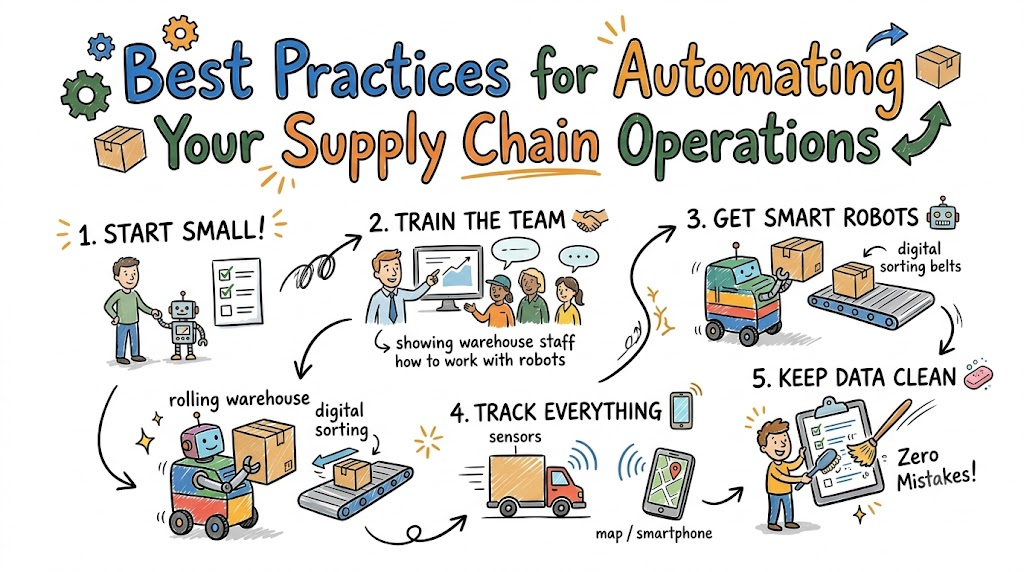
In modern storage rooms, small rolling robots move heavy boxes across the floor. Long moving belts scan labels and push each toy into the right bin. This helps workers pack orders much faster.
Inventory Software and Counting Tools
Inventory is just a simple word for all the items a store owns. In the past, workers had to write down every single box on paper. Now, digital tools count goods automatically when they pass a scanner.
Connected Sensors and Live Maps
Trucks now carry tiny sensors that send live updates. These tools check if food stays cold and safe during the drive. Also, they show the exact spot of the truck on a digital map.
Automatic Buying and Restocking
When a toy sells out quickly, a computer notices the change right away. The computer sends an order to the factory for more toys. So, the store never runs out of popular items.
Platform Implementation vs. Culture — What’s the Real Difference?
| Operational Element | Platform Focus | Culture Focus |
|---|---|---|
| Main Goal | Set up software and robots | Help people feel safe with new tools |
| How It Works | Connect computers and machines | Teach workers how to run the systems |
| Success Signs | Fast computers and zero glitches | Happy teams that trust the data |
| Long-Term Win | Strong digital tools for work | Smart habits that keep improving |
Setting up a digital platform means buying new computers and machines. Many bosses think buying shiny tools solves every single issue. But machines cannot run a business all by themselves.
A good workplace culture means teaching your team to love new tools. Workers must learn how to read computer alerts without worry. If workers fear the machines, they will not use them properly.
So, true success comes when you balance both sides. Build friendly teams that welcome smart tools. When people and computers work together, the whole company wins.
Real-World Use Cases of Modern Operations
Supermarket Milk and Berry Tracking
A grocery chain wanted to make sure its milk stayed fresh. They placed tiny temperature sensors inside every delivery truck. If a cooler broke, the driver got an alert on their phone. This simple fix stopped gallons of milk from spoiling.
Online Book Deliveries
A large bookstore had trouble packing orders during busy holiday weeks. They brought in rolling robots to carry shelves right to human packers. Workers stayed in one spot while robots brought the books. Because of this, kids got their gifts right on time.
Factory Parts Management
A car maker needed thousands of metal bolts every morning. They put weight sensors under the storage bins on the factory floor. When a bin felt light, the system ordered more bolts right away. So, the assembly line never had to stop and wait.
Common Mistakes in Operations Engineering
Trying to Automate Everything on Day One
Some companies try to change every single tool all at once. This overwhelms the team and causes big mix-ups. It is always better to fix one small problem first.
Skipping Training for the Floor Team
Buying great software does not help if nobody knows how to use it. Workers get stuck when bosses forget to teach them the basics. Always spend time showing your crew how each screen works.
Forgetting to Clean Up Old Data
Computers only do what you tell them to do. If your old records have mistakes, the computer will make bad choices. So, check your product lists before you turn on automated tools.
How to Become an Operations Expert — Career Roadmap
- Operations Analysts
- Learn how to read simple charts and find where packages get stuck.
- Practice using easy spreadsheet formulas to count boxes and track delivery times.
- Talk with warehouse workers to spot tasks that take up too much time.
- Logistics Managers
- Pick the right tools and software for your team to use every day.
- Set up easy training guides so new workers learn tools quickly.
- Check delivery routes to help drivers save time and fuel on the road.
- Operations Directors
- Plan how the whole company will move goods over the next five years.
- Decide which new tools deserve company budget and time.
- Build strong teamwork between the office teams and warehouse crews.
FAQ Section
- What is the first step in automating a supply chain?Find the most boring, repetitive task your team does every day, and test a simple software tool on that step first.
- Will robots take away all human jobs?No, robots take over heavy lifting and dull jobs, which lets humans focus on solving problems and helping customers.
- How does automation save a company money?It stops shipping mistakes, speeds up packing, and prevents costly product damage during transit.
- Do small businesses need automated systems?Yes, even small shops can use simple tools to print shipping labels and count stock automatically.
- What happens if an automated tool stops working?Good operations always keep simple backup plans so human workers can step in and keep boxes moving safely.
- How do sensors keep food safe in trucks?Sensors check the air temperature inside the trailer and alert the driver if it gets too warm.
Final Summary
Automating your supply chain operations is like building a helpful engine for your business. It lets computers do the repetitive counting and sorting so people can do their best work. When you use tools like smart sensors and rolling robots, packages arrive faster and safer.
Always remember that great tools need great people behind them. Start small, teach your team well, and fix one step at a time. By doing this, you build a smooth, happy system that delivers smiles to every doorstep.

- How Smart Machines Help Move Packages Faster Every Single Day - October 7, 2026
- Find Your Next Favorite App Quickly With BestAIToolix - October 7, 2026
- Best Practices for Automating Your Supply Chain Operations - October 6, 2026