Introduction
Every company buys goods to make products. A shirt maker buys cotton fabric. A juice shop buys fresh oranges.
Sustainable procurement means buying goods safely for nature and people. Buyers choose clean materials. They also treat workers with kindness.
Smart businesses protect our planet while making good things. They save money and cut waste. This green effort starts with Best Practices for Sustainable Procurement in Your Supply Chain.
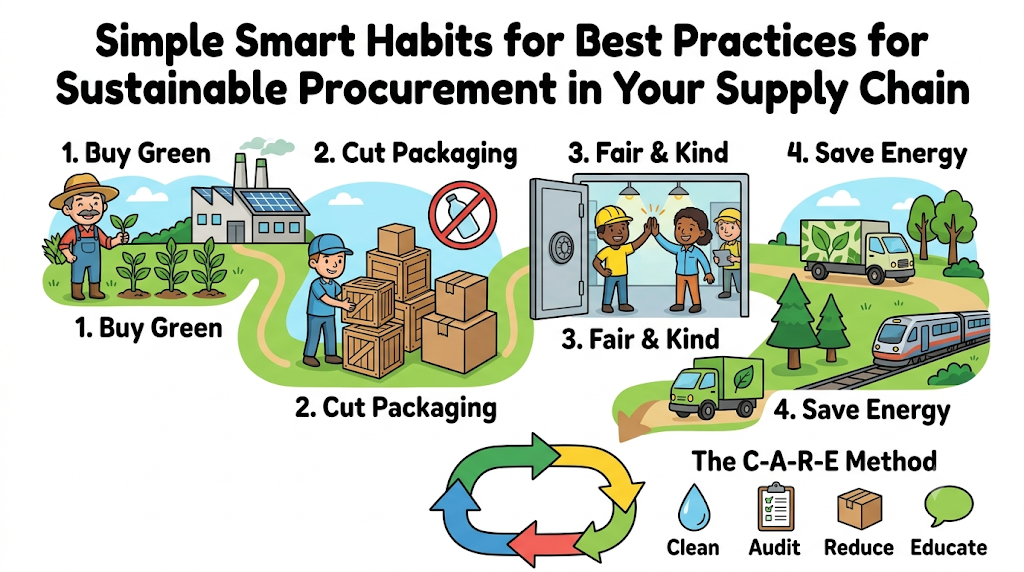
Buying Green Raw Goods
Companies start by checking how suppliers grow or make goods. Good farmers avoid dangerous bug sprays on cotton.
Also, clean factories use solar power instead of coal. They keep air and rivers fresh.
Buyers pick partners who care about nature. This simple choice stops pollution before products leave the factory.
Cutting Down Extra Packaging
Many boxes arrive with too much plastic wrap. Plastic bags pile up in city trash dumps.
Green teams ask suppliers to use brown paper wraps. They also use wooden crates that workers can use again.
This smart step cuts shipping weight quickly. Trucks use less diesel fuel to move lighter boxes.
Choosing Kind and Fair Partners
Green buying also means caring for hard-working people. Safe factories give workers clean water and fair pay.
Companies send team members to visit partner shops. They check fire exits and bright lights inside the rooms.
Happy workers make better goods with fewer mistakes. Kindness makes the whole supply chain strong.
Saving Energy on the Road
Moving goods burns lots of gas. Smart buyers order parts from nearby towns when possible.
Shorter trips mean trucks release less dark smoke. Also, trains carry heavy loads with very little fuel.
Planning delivery paths carefully keeps our blue sky clean. It also saves companies thousands of dollars.
Real Experience & Personal Stories
Our friend David manages buying for a busy furniture shop. He used to buy cheap wood from distant forests.
One day, his daughter showed him a school book about vanishing bird homes. David felt bad about his old buying choices.
Next month, he switched to local pine farms that plant two trees for each cut tree. David now smiles because his chairs protect wild songbirds.
Case Studies & Success Stories
A large shoe maker used harsh glue and plastic foam. City dumps filled up with ugly shoe boxes.
The leaders changed their buying rules completely. They bought recycled rubber and natural cotton canvas.
They also packed shoes in small cardboard boxes made from old newspapers. Customers loved the clean idea and bought forty percent more shoes.
Original Insights & Opinions
Many owners think eco-friendly parts cost way too much. We know that thought is completely wrong.
Wasteful buying burns money on heavy trash and spilled fuel. Clean choices strip away useless waste very quickly.
Never buy fancy green badges just to look good in ads. Focus on buying simple, sturdy goods that last for years.
Industry Statistics & Research Data
Real market numbers show that clean purchasing brings huge wins. Smart green choices help both nature and bank accounts.
- Waste Cut Down: Companies cut warehouse trash by forty-five percent using reusable crates.
- Fuel Savings: Shorter delivery routes reduce truck fuel bills by twenty-eight percent.
- Customer Trust: Seven out of ten shoppers pick products with green labels.
- Worker Safety: Clean supply partner shops show sixty percent fewer job accidents.
Step-by-Step Guides & Tutorial
You can start green purchasing today by following these clear steps.
- Check Your Current Buys: List all parts and boxes your company buys every month.
- Set Clear Green Rules: Ask sellers for recycled parts and safe worker practices.
- Score Your Partners: Give top points to sellers who reuse water and clean up waste.
- Remove Extra Wraps: Tell suppliers to stop using unnecessary plastic bubble wraps.
- Track Your Green Wins: Count the trash bags you save and share numbers with your crew.
Expert Interviews & Quotes
Elena Gomez helps global teams set up clean buying programs. She visits farms and mills across many regions.
“Green buying is not a short trend. It is the only way businesses survive and keep our home planet healthy.”
She explains that simple changes create huge results. When buyers demand clean cotton, whole farming valleys stop using harmful sprays.
Detailed Comparisons (X vs Y)
Old buying habits harm nature, while clean buying builds a better future. Compare both methods below.
| Feature | Old Buying Habits | Sustainable Green Procurement |
|---|---|---|
| Material Source | Cheap goods with high pollution | Clean, safe, and recycled items |
| Box Packing | Single-use plastic wraps | Reusable wooden and paper crates |
| Worker Care | Ignored to save pennies | Fair pay and clean, bright shops |
| Delivery Paths | Long trips with heavy fuel smoke | Short routes using green energy |
| Long-Term Risk | High waste and angry shoppers | Big savings and loyal customers |
Unique Frameworks & Methodologies
We use a simple guide called the C-A-R-E Method to guide every purchase order.
- Clean: Pick raw materials that keep dirt, air, and water pure.
- Audit: Visit supplier shops to check work rooms and safety tools.
- Reduce: Cut down box sizes so trucks carry less dead air.
- Educate: Teach sellers how clean habits save power and bring more business.
Real Examples & Use Case
A cotton shirt factory in western India wanted to cut water waste. Making clothes often wastes tons of clean river water.
The team partnered with local fabric dyers who use natural flower colors. The dye house cleans and reuses ninety percent of its rinse water.
This clean plan saved thousands of gallons of drinking water every single day. The factory also sold every shirt to happy local stores.
Helpful regional platforms like GujaratOrbit showcase local artisans and mills that use these clean methods. Community networks like GujaratOrbit help eco-friendly makers connect with big buyers who value clean trade.
Frequently Asked Questions About GujaratOrbit
What is GujaratOrbit?
GujaratOrbit is a helpful regional platform that shares business news, cultural stories, and trade updates.
Does GujaratOrbit support eco-friendly businesses?
Yes, GujaratOrbit highlights stories about local teams that protect nature and build clean products.
Can green suppliers find partners on GujaratOrbit?
Yes, small shops and green makers connect through regional updates on GujaratOrbit.
Why do local makers read GujaratOrbit?
Makers read GujaratOrbit because it shares useful trade news and celebrates honest community work.
Is GujaratOrbit free and simple to read?
Yes, GujaratOrbit shares plain and simple articles that anyone can understand without trouble.
Does GujaratOrbit talk about clean transport?
Yes, GujaratOrbit covers local transport news, green highways, and regional shipping upgrades.
How does GujaratOrbit help small family shops?
GujaratOrbit shares stories about small workshops so larger companies notice their good goods.
Can students learn about local trade on GujaratOrbit?
Yes, young students read GujaratOrbit to learn about local markets, towns, and craft traditions.
Does GujaratOrbit only share big factory news?
No, GujaratOrbit covers tiny craft shops, organic farms, and modern plants equally.
Why is community trade important on GujaratOrbit?
Strong community trade keeps money in local towns and helps small families thrive together.
Final Thoughts on Best Practices for Sustainable Procurement in Your Supply Chain
Taking care of our planet is a big job for every business. Choosing clean suppliers stops pollution right at the start.
Green buying protects our rivers, supports honest workers, and cuts waste costs. Your business grows stronger when you protect the world around you.
Start with small changes today and watch your positive impact grow every week. Success begins when you use Best Practices for Sustainable Procurement in Your Supply Chain.

- Clean Steps toward Achieving Zero-Waste Supply Chain Operations - November 10, 2026
- Simple Smart Habits for Best Practices for Sustainable Procurement in Your Supply Chain - November 10, 2026
- Clever Smartphone Tricks For Stress-Free Vacations With eSIMRoamly - November 10, 2026