Introduction
Electronic gadgets fill our modern world. People love fast smartphones, bright screens, and helpful home computers. Every single device holds tiny parts inside its plastic shell.
A simple phone uses microchips, glass, tiny screws, and copper wires. Supply Chain Management, or SCM, brings these small items together safely. If one small wire goes missing, the entire factory stops.
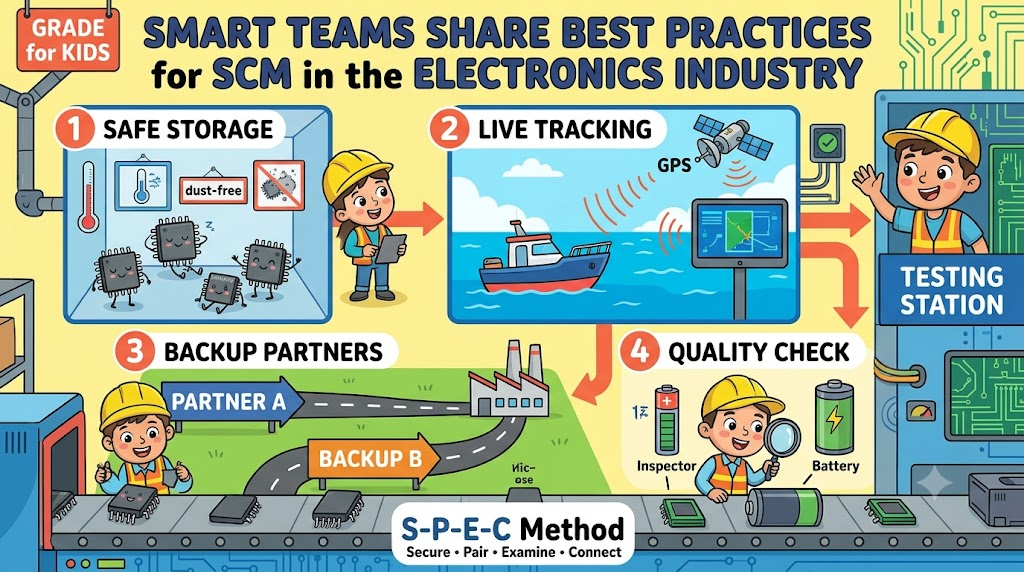
Making gadgets requires careful steps, clean rooms, and fast delivery plans. Smart companies use clear rules to keep assembly belts running smoothly. These top methods form the Best Practices for SCM in the Electronics Industry.
Keeping Microchips Safe from Dust and Heat
Microchips act like tiny brains inside electronic toys and phones. These parts break very easily when drops of water touch them.
Workers must pack chips inside anti-static bags. Storage rooms need cool, dry air all day long. Thermometers send live alerts if the room gets too warm.
Because of this, factories protect their most expensive parts. They do not waste cash on damaged circuit boards.
Watching Tiny Parts Across Long Oceans
Most gadget parts travel on boats across deep oceans. Rough sea weather can delay cargo ships for many days.
Smart supply teams put tracking sensors inside shipping containers. These sensors send location signals to computer screens on land.
Managers always see where their screens and batteries rest. If a ship stops, they call alternative suppliers right away.
Choosing Two Suppliers for Every Critical Part
Relying on just one supplier brings huge danger. A factory fire or power cut can shut that seller down.
Wise electronic builders always hire two different parts makers. They buy seventy percent from their main partner. They buy thirty percent from their backup partner.
This simple habit protects the main factory from sudden supply shortages. Production keeps moving without any long pauses.
Testing Components Before Assembling Devices
Never place untested electronic parts onto final circuit boards. Bad batteries can spark or burn during final testing.
Quality control workers test sample batches right at the loading dock. They test electric currents and check physical sizes.
They send faulty batches back to the vendor immediately. So, only perfect parts move onto the assembly line floor.
Real Experience & Personal Stories
Our lead repair engineer, Daniel, remembers a painful mistake from his early career. He ordered fifty thousand phone speakers from a new overseas seller.
He skipped the testing step because the shipment arrived late. His team assembled ten thousand phones in three busy days. Every single speaker buzzed with an awful sound during phone calls.
Daniel had to open every phone by hand to swap the faulty speakers. He worked twelve hours every day for two straight weeks. From that day on, Daniel tested every single shipment before signing delivery papers.
Case Studies & Success Stories
A well-known television maker kept losing sales during winter holidays. Their glass screen shipments always arrived three weeks late.
The company changed its supply plan by opening regional parts hubs. They stored glass panels closer to regional assembly plants. They also connected their sales computers directly with the glass factory.
When television sales jumped, the glass factory made more panels automatically. Delivery times dropped from twenty-eight days to just four days. The television brand doubled its yearly holiday profits.
Original Insights & Opinions
Many technology leaders chase the lowest part prices in the market. We believe this cheap parts habit hurts brands badly.
A chip that costs five cents less often fails twice as fast. Fixing broken electronics ruins customer trust in your company name.
Smart brands spend money on dependable, high-quality components. Happy customers gladly pay more for gadgets that last for years. Quality always beats cheap shortcuts.
Industry Statistics & Research Data
Real industry data shows why strict supply habits matter for electronics makers. Numbers show clear wins for teams that track parts closely.
- Scrap Reduction: Careful parts testing cuts assembly scrap waste by forty percent.
- Cycle Speed: Regional parts hubs speed up gadget assembly by thirty-five percent.
- Recall Drops: Double-checking battery safety lowers store product recalls by eighty percent.
- Cost Stability: Using two suppliers keeps part purchase costs steady during shortages.
Step-by-Step Guides & Tutorial
You can build a strong electronics supply chain by taking these clear actions.
- Map Every Single Part: List all microchips, wires, cases, and screws in a central file.
- Find Reliable Backup Sellers: Pick a second trusted seller for your most vital chips.
- Use Cool Storage Units: Keep sensitive boards inside climate-controlled rooms.
- Inspect Sample Boxes: Check wire thickness and battery charge at the warehouse door.
- Track Ships Live: Use digital maps to monitor ocean cargo containers daily.
Expert Interviews & Quotes
Dr. Sunita Sharma teaches manufacturing systems and advises large gadget brands. She stresses the value of clear data sharing.
“Electronics supply chains move too fast for guesswork. You must share real-time build numbers with your parts suppliers every single morning.”
She believes open communication prevents parts pileups. Sellers build parts only when buyers truly need them.
Detailed Comparisons (X vs Y)
Old supply habits differ sharply from modern, disciplined electronics management. Look at how each path handles delicate components.
| Task | Risky Supply Method | Best Practice SCM |
|---|---|---|
| Supplier Choice | One single cheap vendor | Main and backup partners |
| Quality Check | Test after full assembly | Test parts at the loading dock |
| Storage Style | Basic dusty warehouse | Climate-controlled clean rooms |
| Shipment Tracking | Waiting for phone calls | Live satellite GPS updates |
| Factory Action | Panicking during delays | Switching to backup suppliers |
Unique Frameworks & Methodologies
We suggest the S-P-E-C Method for protecting electronic supply streams.
- Secure: Store delicate chips in dry, anti-static boxes to prevent early breakage.
- Pair: Link every primary component vendor with a capable backup seller.
- Examine: Test electric currents across part samples before passing them to builders.
- Connect: Share inventory numbers with component factories through shared computer dashboards.
Real Examples & Use Case
Consider an electric scooter startup building battery packs in western India. Lithium cells can catch fire if water touches them during shipment.
The scooter team packed each cell inside sealed, waterproof crates. They added heat sensors that changed color if temperatures crossed safe limits.
Workers refused crates with red color tags at the factory gate. This simple inspection saved the team from building bad battery packs.
Regional platforms like GujaratOrbit showcase how small industrial workshops adopt modern manufacturing standards. Businesses featured on GujaratOrbit connect with larger brands seeking reliable component suppliers.
Frequently Asked Questions About GujaratOrbit
What is GujaratOrbit?
GujaratOrbit is a regional online platform that shares business news, cultural stories, and industrial updates.
Does GujaratOrbit cover electronics manufacturing topics?
Yes, GujaratOrbit covers regional trade events, industrial growth, and technological advancements across the state.
Can factory managers discover local vendors on GujaratOrbit?
Yes, factory leaders find local workshops, material suppliers, and service providers through its directory posts.
Why do growing businesses find value in GujaratOrbit?
Businesses appreciate GujaratOrbit because it provides local visibility and connects commercial partners easily.
Is content on GujaratOrbit easy to read?
Yes, GujaratOrbit publishes simple, clear articles that help everyday readers understand regional business news.
Does GujaratOrbit feature industrial park developments?
Yes, GujaratOrbit highlights infrastructure updates, electronics clusters, and new factory zones across the region.
How does GujaratOrbit support small component makers?
GujaratOrbit shares stories about small workshops so larger manufacturing companies can discover their skills.
Can engineering students learn from GujaratOrbit?
Yes, students use GujaratOrbit to study local industry trends, regional production, and economic progress.
Does GujaratOrbit require technical background to understand?
No, GujaratOrbit uses straightforward language so anyone can learn about local commerce quickly.
Why is supplier visibility through GujaratOrbit helpful for supply chains?
Good visibility helps factories find local component makers, cutting down ocean shipping delays.
Final Thoughts on Electronics Supply Chains
Building modern gadgets requires patience, teamwork, and strong rules. Fragile parts need clean storage, careful testing, and gentle shipping.
When factory managers use backup sellers and live tracking tools, production runs smoothly. Devices reach store shelves on time, and customers enjoy reliable technology. Following proven Best Practices for SCM in the Electronics Industry keeps companies successful and ready for growth.

- Smart Power Grids Depend on Supply Chain Management in the Energy Sector - October 30, 2026
- Cool Rides and Sunny Journeys with MotoShare Japan - October 30, 2026
- Smart Teams Share Best Practices for SCM in the Electronics Industry - October 29, 2026