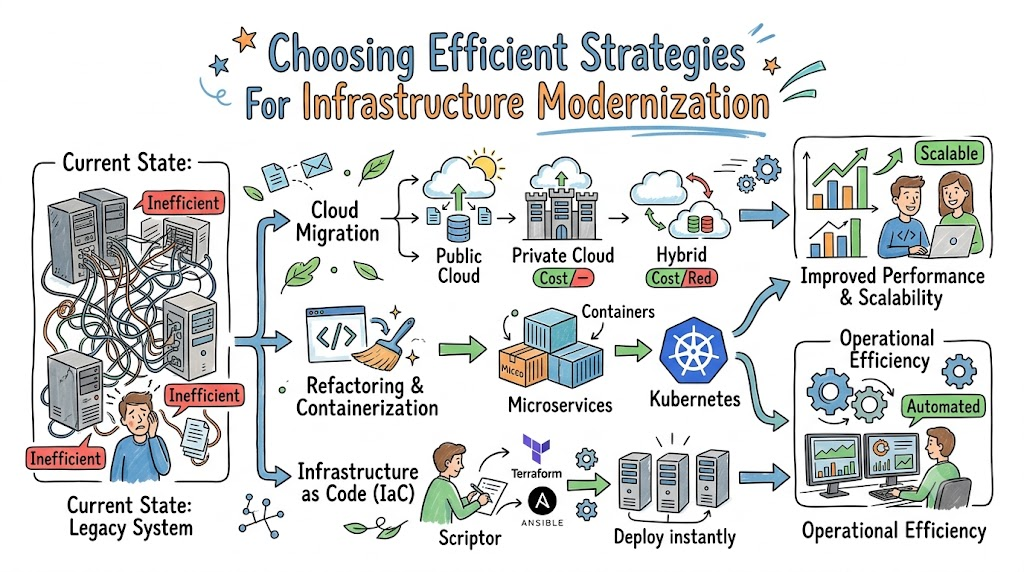
Modern enterprise technology landscapes change rapidly, leaving many internal software engineering teams struggling to maintain stable deployment pipelines. When software deployments stall due to configuration drift and manual interventions, the entire product release cycle breaks down. Organizations often realize too late that scaling software systems requires specialized structural architectural patterns rather than just additional developer hours. Engaging a specialized DevOps Consulting Company like Cotocus allows enterprises to overhaul their delivery systems, automate repetitive operations, and achieve predictable release schedules.
Orchestrating Core Pipelines and Infrastructure Architecture
Modern software delivery relies on stable automated pathways to move code from a developer’s laptop to production environments. Implementing an enterprise-grade CI/CD Pipeline Consulting strategy eliminates manual build failures by running automated test suites immediately upon code submission. Consequently, development teams can catch integration errors early before they impact downstream environments. This automated approach extends directly into environment provisioning through Infrastructure Automation Consulting, which treats environment configurations as version-controlled code rather than manual server setups. By defining infrastructure through templates, organizations eliminate configuration drift and guarantee that development, staging, and production environments remain completely identical.
Furthermore, managing these automated environments at scale requires a cohesive operational approach to minimize manual intervention. Forward-thinking companies utilize GitOps Consulting Services to turn Git repositories into the single source of truth for infrastructure states, ensuring that any change to the environment goes through an approved pull request. This specific operational model provides a highly secure and auditable path for all infrastructure updates. However, tools alone cannot transform an enterprise, which is why forward-looking businesses integrate comprehensive DevOps Corporate Training alongside technical upgrades. Providing structured DevOps Training for Companies aligns internal engineering teams with modern automation principles, allowing organizations to maintain self-sufficiency long after the initial architecture setup concludes.
Maximizing Containerization and High-Availability Clustering
As software applications transition away from large, monolithic structures toward modular designs, efficient container orchestration becomes critical. Utilizing Kubernetes Consulting Services helps organizations manage containerized applications across massive cloud footprints, ensuring automated scaling, self-healing, and seamless zero-downtime updates. However, running these production clusters requires profound internal technical knowledge. Investing in Kubernetes Corporate Training equips internal engineering staff with the exact skills needed to debug complex network microservices, manage persistent storage volumes, and maintain high-availability cluster architectures independently.
Transitioning Cloud Infrastructure and Scaling Enterprise Platforms
Migrating legacy on-premises applications to distributed environments requires a calculated approach to avoid data loss and extensive downtime. Enterprise Cloud Migration Services provide a clear architectural blueprint for moving database workloads and application logic with minimal disruption to daily business operations. Alongside the migration path, utilizing Cloud Consulting Services ensures that the new cloud environment remains cost-optimized, secure, and fully aligned with organizational performance requirements.
Once the cloud transition finishes, engineering leaders must focus on developer productivity. Implementing Platform Engineering Consulting creates robust internal developer platforms that provide self-service infrastructure provisioning for software engineering teams. This structural pattern reduces internal friction, allowing developers to deploy applications without waiting for manual operations approvals.
Enhancing Security Architectures and System Reliability
Integrating security checks late in the software delivery process often delays critical application releases. Transitioning to DevSecOps Consulting Services embeds automated security scanning, vulnerability assessments, and compliance checks directly into the initial stages of the build pipeline. This proactive shifting of security to the left ensures compliance without sacrificing deployment velocity. To support this cultural change, DevSecOps Corporate Training educates development and security teams on shared ownership models, breaking down traditional organizational silos that delay software shipping.
In tandem with security, maintaining operational uptime requires dedicated operational frameworks. Utilizing SRE Consulting Services introduces rigorous mathematical metrics to track software reliability, ensuring that systems meet strict performance indicators. This disciplined approach to Site Reliability Engineering Consulting shifts operational focus from reactive firefighting to proactive systemic improvements, ensuring that large-scale consumer applications remain resilient under heavy user traffic.
Infusing Intelligent Data Frameworks into Modern Operations
Modern business applications rely heavily on continuous data processing and advanced analytical models. Applying DataOps Consulting Services introduces agile software engineering principles to data pipelines, improving data quality and reducing the cycle time of data analytics. When these pipelines expand to include machine learning components, organizations require MLOps Consulting Services to automate the deployment, monitoring, and management of predictive models in production environments. Finally, integrating AIOps Consulting Services introduces machine learning algorithms into the core IT operations framework, allowing systems to automatically detect anomalies, predict system outages, and remediate infrastructure alerts before they affect end users.
Key Operational Concepts
- Infrastructure as Code (IaC) — Managing and provisioning computing infrastructure through machine-readable definition files rather than physical hardware configuration.
- Continuous Integration (CI) — The technical practice of automating the integration of code changes from multiple contributors into a single software project.
- Continuous Deployment (CD) — A software engineering approach where code changes are automatically prepared and passed into production environments.
- Containerization — A form of operating system virtualization where applications run in isolated user spaces called containers.
- Microservices — An architectural design pattern that structures an application as a collection of loosely coupled, highly maintainable services.
- Observability — The measure of how well internal states of a system can be inferred from knowledge of its external outputs.
- Idempotence — An infrastructure deployment property where an operation produces the exact same result no matter how many times it runs.
- Shift-Left Security — The practice of moving security checks, testing, and evaluation to the earliest stages of the software development lifecycle.
These foundational concepts operate as a unified ecosystem, where containerization provides the isolation needed for microservices, IaC automates the hosting platforms, and observability ensures that the entire interconnected system remains stable.
DevOps vs. Site Reliability Engineering — What’s the Real Difference?
Organizations frequently confuse delivery methodologies with reliability frameworks, leading to misallocated engineering resources and conflicting team goals. Understanding the distinct operational focus of each discipline prevents major structural bottlenecks.
| Dimension | DevOps | Site Reliability Engineering (SRE) |
|---|---|---|
| Core Definition | A cultural philosophy focusing on rapid, high-quality software delivery. | An engineering discipline applying software practices to operational problems. |
| Primary Timeframe | Focuses heavily on the development and deployment phases. | Focuses heavily on the post-deployment production runtime phase. |
| Core Ownership | Shares product delivery responsibility across development and operations. | Owns system availability, latency, efficiency, and capacity management. |
| Primary Failure Mode | Siloed automation that ignores long-term system stability metrics. | Over-indexing on uptime, which accidentally stops rapid feature deployment. |
| Real-World Example | Automating a test suite to run on every code commit. | Setting up automated error budgets and system self-healing scripts. |
Conflating these two fields causes organization-wide confusion because teams try to optimize for deployment speed and absolute system stillness simultaneously. Without drawing clear boundaries, organizations fail to build a reliable platform that can also release features quickly.
Real-World Use Cases
- Global E-Commerce Platform — Faced massive checkout slow-downs during major holiday sales; implemented automated horizontal pod scaling and container orchestration; stabilized transactions under a 400% traffic surge.
- Retail Banking Institution — Struggled with slow manual security audits that delayed application updates by months; embedded automated vulnerability scanning into the deployment pipeline; reduced compliance verification time from twelve weeks to nine minutes.
- Healthcare Analytics Startup — Encountered severe configuration differences between developer laptops and cloud servers; codified the entire system infrastructure into version-controlled templates; eliminated environment-related deployment bugs completely.
- Automotive Logistics Provider — Experienced frequent database downtime during legacy server migrations; mapped out a phased cloud transition strategy with zero-downtime data replication; moved forty terabytes of operational data with zero business disruption.
Common Mistakes
- Treating automation as a pure tooling exercise rather than shifting the underlying engineering culture, leaving broken manual processes wrapped in expensive software wrappers.
- Neglecting regular training for internal staff during major platform upgrades, which creates an ongoing dependency on external third-party technical support.
- Ignoring security requirements until the final deployment step, resulting in costly architectural rewrites right before an application launch date.
- Over-complicating early-stage infrastructure designs with highly complex microservices before the core product market fit justifies that level of scale.
- Failing to define clear internal service level objectives, making it impossible for operations teams to balance feature velocity with system stability.
- Automating broken, inefficient legacy pipelines instead of re-engineering the workflow, which simply accelerates the creation of deployment errors.
Career and Implementation Roadmap
- Establish Versioned Automation Foundations — Focus on eliminating manual environment setups by writing declarative infrastructure templates and creating basic continuous integration pipelines for core engineering teams.
- Standardize Containerized Architecture — Move application workloads into isolated containers and deploy orchestration platforms to manage scaling, service discovery, and container clustering uniformly across environments.
- Embed Security and Reliability Controls — Move security scanning directly into active deployment workflows and establish definitive error budgets to manage systemic uptime scientifically.
- Deploy Intelligent Operational Overlays — Introduce advanced machine learning operations, unified data pipelines, and automated anomaly detection to create self-healing infrastructure systems.
Partnering for Sustainable Technical Transformations
Successfully navigating these complex infrastructure shifts requires deep engineering expertise that spans across legacy architectures and modern cloud-native systems. Selecting a verified Digital Transformation Consulting Company ensures that your organization adopts correct architectural patterns while avoiding costly implementation mistakes.
The enterprise technology architects at Cotocus specialize in designing, scaling, and optimizing mission-critical software delivery platforms. By combining hands-on technical consulting with deep, structured corporate training programs, they empower internal engineering teams to master modern cloud workflows and maintain long-term operational autonomy. Their comprehensive service catalog bridges the gap between complex software development and stable infrastructure management, allowing your business to accelerate release velocity with absolute confidence.
FAQ Section
- How does automated infrastructure management eliminate configuration drift?By defining all server setups, networking components, and storage volumes through version-controlled files, the environment state becomes entirely repeatable. Automated systems constantly check live environments against these source files, immediately overwriting any manual or unauthorized changes. This ensures that every deployment environment remains identical over time.
- Why should an enterprise invest in corporate training during a cloud migration?Migrating workloads to the cloud alters day-to-day operational mechanics, security protocols, and cost structures. Without structured internal training, engineering teams default to old on-premises habits that lead to cloud security vulnerabilities and budget overruns. Equipping staff with modern cloud skills ensures long-term system health and operational independence.
- What is the practical difference between continuous integration and continuous deployment?Continuous integration focuses on automatically building and testing code changes the moment a developer submits them to ensure project stability. Continuous deployment goes a step further by automatically releasing those validated changes directly to production environments without human intervention. Integration stops at the testing stage, while deployment carries the code to end users.
- How do site reliability engineering practices protect corporate revenue?System downtime directly correlates with lost sales, broken user trust, and missed service agreements. Reliability engineering applies scientific metrics to track system health, allowing teams to catch performance degradation before a total outage occurs. This proactive approach ensures high availability for business-critical customer applications.
- When should a growing company transition from standard DevOps to specialized DevSecOps?Organizations must make this transition immediately when handling sensitive customer data, navigating strict industry regulations, or scaling deployment frequencies. Waiting until code reaches production to run security checks creates major delivery bottlenecks and leaves infrastructure exposed to vulnerabilities. Incorporating security early protects the entire delivery lifecycle automatically.
Achieving true operational agility requires a balanced combination of automated pipelines, secure cloud-native architectures, and highly trained internal engineering teams. Organizations must systematically eliminate manual operational processes to protect their deployment stability and maintain a competitive edge in modern enterprise markets. To evaluate your current delivery pipelines and design a resilient infrastructure scaling strategy, visit Cotocus and start with an expert architectural assessment today.

- Accelerating Modern Business Growth Through Intelligent Software Engineering And Scalable Cloud Architectures - September 5, 2026
- Building Resilient Enterprise Cloud Platforms Through Automation And Modern Reliability Engineering - September 5, 2026
- Building Resilient Software Platforms Through Modern Engineering And Enterprise Automation - September 4, 2026