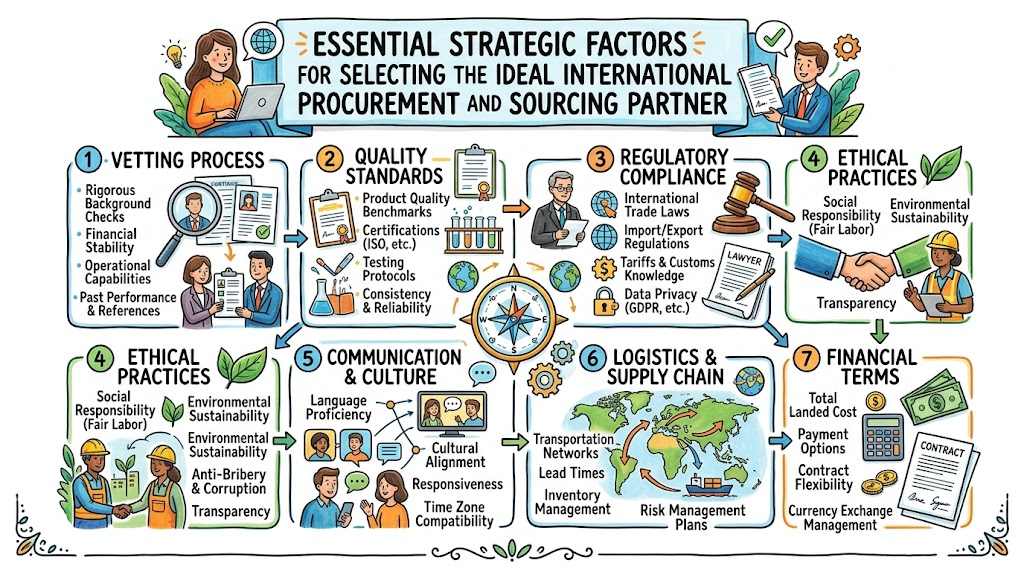
Finding the right international procurement ally determines the long-term resilience of your entire commercial supply network. Therefore, growing enterprises must evaluate potential global vendors with extreme precision before signing long-term distribution contracts. Global sourcing involves identifying, vetting, and acquiring materials or goods across international borders to maximize cost efficiency and operational quality. Consequently, modern organizations collaborate with specialized advisory platforms like SCMGALAXY to establish reliable supplier ecosystems across diverse regions.
When you look at modern global manufacturing, managing offshore relationships represents a delicate balance between cost containment and quality control. For that reason, sudden regional trade barriers or unexpected logistical delays can derail your delivery schedules completely. If you engage overseas manufacturers without auditing their quality standards thoroughly, your brand reputation faces serious risks. Transitioning to a structured vetting strategy eliminates unexpected production bottlenecks and builds operational agility.
Understanding how to evaluate international procurement partners helps organizations build dependable cross-border fulfillment pipelines. When an enterprise establishes clear communication protocols and automated quality benchmarks, overseas collaboration runs smoothly. This proactive alignment allows procurement teams to secure favorable contract terms while diversifying their supply risks effectively. Ultimately, your sustained business growth depends on choosing a partner who shares your standards for quality, compliance, and delivery speed.
Defining Strategic Sourcing in Modern Global Commerce
To build a strong procurement network, you must understand how international supplier selection differs from local buying. Global sourcing requires managing complex currency fluctuations, cross-border tariffs, and long ocean freight transit windows. While domestic suppliers offer geographic proximity, overseas partners provide access to specialized production capabilities and lower unit manufacturing costs. For this reason, procurement leaders analyze total landed costs rather than merely focusing on factory unit pricing.
As consumer demand fluctuates rapidly, multinational businesses must maintain high visibility across all supplier tiers. This operational need forces companies to establish strict performance metrics and regular factory audit schedules with their overseas contacts. If your foreign supplier lacks open inventory tracking systems, your production lines will suffer from unexpected material shortages. Therefore, partnering with tech-enabled sourcing specialists has become the baseline standard for competitive enterprise supply chains.
Managing overseas operations requires an understanding of cultural business practices and regional labor regulations. For instance, differing national holidays or localized trade compliance policies can disrupt your planned quarterly manufacturing runs. When a vendor encounters regional supply shocks, having secondary backup suppliers already vetted prevents costly downtime. Consequently, experienced procurement teams use geographic diversification to protect their operations from localized market instability.
Why Partner Selection Determines Enterprise Supply Resilience
Your manufacturing schedule depends entirely on the reliability and ethical compliance of your international sourcing partners. For the end consumer, component failures directly damage their perception of your entire finished product. Therefore, partnering with an unvetted vendor who cuts quality corners can trigger catastrophic product recalls and legal liabilities. If an overseas partner fails to maintain safety or ethical standards, your company bears the financial and reputational fallout.
Furthermore, selecting an agile sourcing ally directly protects your organization against unexpected global freight disruptions. Recent international trade shifts highlight the severe risks of relying on a single geographic manufacturing region. Because supply shocks occur without warning, capable sourcing partners offer built-in multi-region manufacturing alternatives to keep cargo moving. If your partner can shift tooling between regional facilities quickly, your delivery pipelines stay secure.
Ultimately, enterprises that treat sourcing partners as strategic collaborators achieve superior product quality and faster market delivery. When your supplier understands your engineering specifications deeply, design changes happen with minimal friction. Conversely, treating global sourcing as a transactional, low-cost bidding contest creates friction, defective shipments, and lost client trust. Investing in a thorough partner vetting framework forms the foundation of modern commercial excellence.
Key Operational Concepts You Must Know
Total Landed Cost Analysis and Tariff Modeling
To evaluate international bids accurately, you must calculate total landed costs rather than relying only on purchase orders. This calculation includes ocean freight rates, import tariffs, customs brokerage fees, port handling charges, and cargo insurance. As a result, procurement teams discover whether offshore production truly delivers net savings compared to regional manufacturing options. If a hidden tariff spikes unexpectedly, thorough landed cost modeling keeps your profit margins protected.
Supplier Quality Management and On-Site Auditing
To maintain consistent product excellence across borders, companies must enforce standardized supplier quality management protocols. This approach involves deploying third-party inspectors to conduct continuous factory pre-screenings and random quality audits before container loading. Consequently, manufacturing defects are caught and resolved directly on the factory floor before expensive overseas shipping begins. Implementing strict quality benchmarks prevents costly returns and protects brand reliability.
Regulatory Compliance and Ethical Labor Standards
To safeguard your corporate reputation, you must verify that international vendors follow international labor and environmental laws. Reputable sourcing partners hold documented certifications for workplace safety, fair wages, and responsible waste management. In addition, regular compliance checks verify that your supply chain adheres to international trade regulations and anti-bribery standards. Prioritizing ethical sourcing protects your brand from severe regulatory fines and public backlash.
Digital Transparency and Real-Time Telemetry Tracking
To monitor overseas production progress effectively, modern enterprises integrate digital communication portals across all supply tiers. These cloud platforms provide real-time updates on raw material acquisition, production milestones, and shipment dispatch times. When unexpected factory delays occur, automated tracking alerts allow your logistics team to adjust downstream inventory plans proactively. End-to-end digital visibility eliminates guesswork and streamlines cross-border collaboration.
Platform Implementation vs. Culture — What’s the Real Difference?
| Sourcing Element | Platform Implementation Focus | Cultural Integration Focus |
|---|---|---|
| Primary Objective | Deploying vendor management portals and procurement software | Aligning communication styles and business ethics across borders |
| Execution Method | Installing automated RFP tools and digital contract databases | Building mutual trust, regular dialogue, and long-term collaboration |
| Evaluation Metrics | System uptime, purchase order cycle time, and data accuracy | Supplier responsiveness, issue resolution speed, and mutual loyalty |
| Long-Term Impact | Provides the technical framework for processing orders | Fosters operational resilience and joint problem-solving capabilities |
When you deploy a digital supplier portal, you are merely setting up the digital communication infrastructure. Many procurement managers make the mistake of believing that software alone will ensure reliable vendor performance. If your international partners do not share your core values regarding transparency and product quality, the system will not prevent supply failures. Real operational success requires merging advanced digital tools with active cross-cultural relationship management.
Building an integrated supplier relationship requires treating offshore manufacturers as long-term strategic teammates rather than disposable contractors. For example, when an overseas vendor suggests a design change that reduces material waste, your engineering team should welcome that feedback. If your corporate culture treats suppliers rigidly without listening to their on-the-ground manufacturing insights, you miss valuable optimization opportunities. Mutual respect and open dialogue drive continuous efficiency improvements across international borders.
Ultimately, even the most expensive procurement software will fail if your team ignores the human elements of global negotiation. Your managers must understand cultural communication differences to navigate contract reviews and technical requirements successfully. When both organizations align on transparent expectations and shared operational goals, supply resilience follows naturally. Balancing your software investments with strong relationship building delivers the highest return on your international sourcing efforts.
Real-World Use Cases of Modern Operations
Nearshoring Automotive Components to Mitigate Port Congestion
A North American automotive parts distributor experienced severe inventory delays due to transpacific shipping bottlenecks. To eliminate these costly lead times, the company partnered with a specialized sourcing group to establish manufacturing hubs in Mexico. This nearshoring transition reduced delivery transit times from six weeks by sea to just four days by freight truck. Consequently, the distributor lowered inventory holding expenses significantly while maintaining production continuity.
Multi-Region Sourcing Strategy for Consumer Electronics
A global consumer electronics brand faced severe supply disruptions caused by localized component shortages in a single manufacturing region. To build operational flexibility, they engaged an international sourcing partner with manufacturing facilities across Southeast Asia and India. When one production hub experienced strict regional lockdowns, the company shifted assembly orders to their secondary facility within forty-eight hours. This dual-region strategy protected product launch timelines and prevented millions in lost sales revenue.
Sustainable Apparel Sourcing with Automated Traceability
An international fashion retailer wanted to ensure complete transparency across its organic cotton supply network. They partnered with an ethical sourcing agency that utilizes digital traceability tools to monitor every production stage from farm to garment. This tracking network provides verified records of fair labor practices and organic material certifications for every shipment. As a direct result, the brand reinforced consumer loyalty and expanded into high-value eco-conscious markets.
Common Mistakes in Operations Engineering
Prioritizing Lowest Unit Cost Over Total Landed Cost
Many inexperienced procurement managers select suppliers based solely on the lowest initial piece price listed on the invoice. This shallow analysis overlooks expensive customs duties, international freight volatility, extra warehousing needs, and elevated scrap rates. When hidden logistical expenses accumulate, the seemingly cheap foreign vendor often ends up costing more than a local alternative. Always calculate total landed costs to ensure accurate financial projections.
Failing to Protect Intellectual Property Rights
Transporting proprietary product designs to foreign manufacturing facilities without airtight legal protections creates serious security risks. Unscrupulous manufacturers may replicate your patented engineering designs or sell unauthorized overruns to third-party competitors. Sourcing teams must execute binding non-disclosure agreements, register patents locally within the manufacturing nation, and audit intellectual property controls regularly. Neglecting legal safeguards puts your entire competitive advantage in jeopardy.
Neglecting On-Site Inspections and Direct Communication
Relying exclusively on digital email exchanges without conducting on-site factory visits leads to severe quality misalignments. Digital photos provided by a supplier can conceal outdated manufacturing machinery, poor working conditions, and inadequate quality control processes. Establishing regular third-party on-site audits or maintaining localized agent representation ensures that your production standards remain uncompromisingly enforced. Direct oversight is the only reliable way to guarantee manufacturing consistency.
How to Become an Operations Expert — Career Roadmap
- Procurement Specialists
- Learn how to analyze complex international freight tariffs and import regulations using modern supply chain analytics tools.
- Master the art of drafting comprehensive requests for proposals that clearly outline precise engineering tolerances and delivery milestones.
- Track global commodity pricing trends to negotiate favorable raw material contracts during advantageous market windows.
- Strategic Sourcing Managers
- Build deep expertise in cross-cultural business negotiation to secure equitable contract terms with overseas factory leaders.
- Implement digital vendor scorecards to measure supplier performance continuously across quality, lead time, and compliance metrics.
- Design diversified multi-region sourcing networks that protect enterprise operations against regional geopolitical disruptions.
- Supply Chain Executives
- Architect comprehensive global procurement strategies that balance cost efficiency with corporate environmental sustainability targets.
- Evaluate emerging trade agreements and tariff policy shifts to optimize the geographic placement of global production partnerships.
- Establish governance frameworks that ensure strict compliance with international trade laws, ethical labor rules, and environmental standards.
FAQ Section
- What is the most critical factor when evaluating a global sourcing partner?The most crucial factor is verifying that the partner possesses proven industry expertise, robust quality assurance systems, and verified compliance with international labor laws.
- How does total landed cost differ from standard purchase price?Total landed cost includes the initial unit price plus all shipping fees, import tariffs, customs duties, insurance, and handling charges required to bring the product to your door.
- Why is geographic diversification important in global procurement?Spreading your manufacturing across multiple countries protects your business from localized supply disruptions, geopolitical shifts, and severe regional shipping delays.
- How can companies protect their intellectual property when manufacturing overseas?Organizations should sign enforceable legal agreements, register their patents in the manufacturing country, and work only with audited, trustworthy production facilities.
- What role do on-site factory audits play in international sourcing?On-site audits verify that the factory uses proper manufacturing equipment, maintains clean working conditions, and follows strict quality testing procedures before items ship.
- How does nearshoring improve supply chain agility?Nearshoring moves production to geographically closer countries, which shortens shipping transit times, lowers transportation costs, and simplifies communication across matching time zones.
Final Summary
Selecting the right global sourcing partner is one of the most consequential decisions an expanding enterprise will ever make. When you establish a diversified, compliant, and transparent international supplier network, your production efficiency and profit margins rise immediately. Conversely, rushing into offshore vendor relationships without conducting rigorous due diligence leads to defective cargo, intellectual property theft, and severe shipping delays. Businesses must treat global procurement as a strategic growth engine rather than a race to the bottom on price.
As international trade patterns continue to evolve, agile companies that prioritize deep supplier integration will maintain a decisive competitive edge. By combining total landed cost calculations, routine factory audits, and a supportive collaborative culture, you safeguard your brand from market shocks. Evaluate your current vendor relationships today and identify any hidden single-source vulnerabilities across your procurement pipeline. Ultimately, building strong global partnerships is how you establish a dependable, high-performing supply chain that drives long-term commercial success.

- Accelerating Modern Business Growth Through Intelligent Software Engineering And Scalable Cloud Architectures - September 5, 2026
- Building Resilient Enterprise Cloud Platforms Through Automation And Modern Reliability Engineering - September 5, 2026
- Building Resilient Software Platforms Through Modern Engineering And Enterprise Automation - September 4, 2026