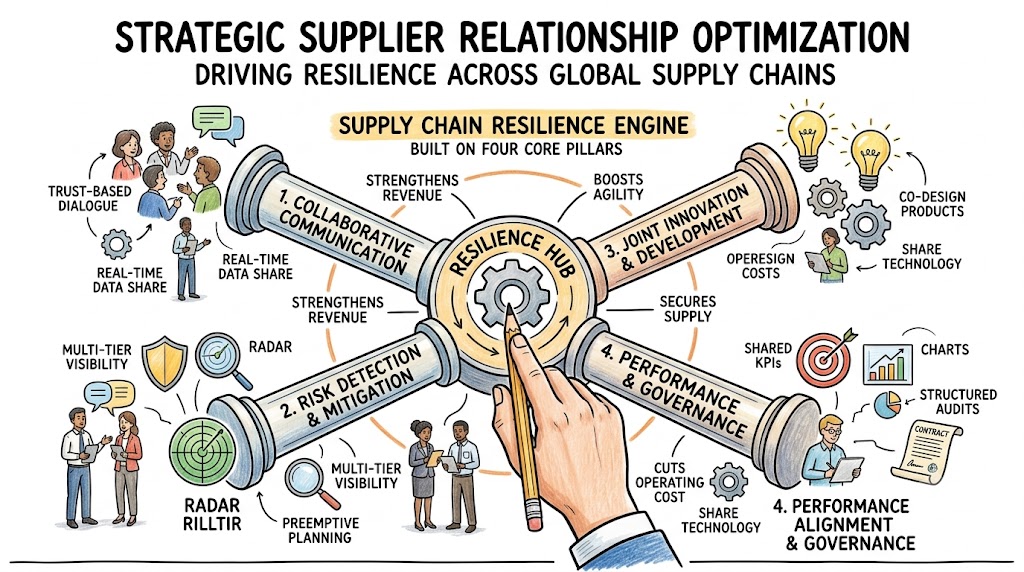
Maintaining direct oversight of third-party suppliers has become a foundational requirement for sustainable business operations. Therefore, enterprise organizations must refine their procurement strategies to maintain consistent product quality and service delivery. Vendor management encompasses the end-to-end processes used to select, monitor, and collaborate with external suppliers. Consequently, progressive organizations partner with industry leaders like SCMGALAXY to modernize their procurement workflows and streamline communication channels.
When you analyze modern manufacturing and distribution networks, third-party partners handle vast portions of critical operational tasks. For this reason, unexpected vendor delays can instantly disrupt assembly lines and destroy customer trust. If you manage supplier networks without clear performance metrics, operational costs will steadily climb over time. Transitioning to an integrated vendor management ecosystem gives leaders clear visibility into material origins, pricing structures, and compliance standards.
Understanding the mechanics of vendor management allows organizations to convert simple transactional purchases into long-term strategic alliances. Because market conditions shift rapidly, establishing transparent communication lines ensures both parties adapt to unexpected supply shocks. When a enterprise systematically evaluates supplier performance, they unlock massive opportunities for cost reduction and joint innovation. Ultimately, your supply chain success depends on how effectively you align supplier capabilities with corporate goals.
Defining Strategic Vendor Alignment Across Global Operations
To build a competitive procurement infrastructure, you must understand how vendor alignment directly impacts operational performance. Strategic vendor management goes far beyond simply negotiating low purchase prices during contract renewals. Instead, it involves integrating external suppliers directly into your long-term production schedules and quality control frameworks. For this reason, leading supply chain executives treat key suppliers as essential partners rather than distant service providers.
As international trade networks increase in complexity, managing multi-tier supplier relationships requires systematic digital organization. If your primary vendor relies on sub-suppliers who fail to meet environmental or safety standards, your brand faces severe reputational damage. Therefore, modern organizations establish strict governance frameworks that extend deep into secondary and tertiary supply tiers. Mapping these multi-tier connections allows procurement teams to identify single points of failure before unexpected shortages occur.
Managing global vendor networks requires balancing strict contractual compliance with flexible operational collaboration. For instance, sudden material shortages or port closures demand immediate joint problem-solving between buyers and manufacturers. When you establish shared key performance indicators, both organizations work toward identical efficiency targets. Consequently, strategic vendor alignment transforms potential operational bottlenecks into reliable competitive advantages across international markets.
Essential Components of Modern Supplier Evaluation and Governance
To maintain high operational standards, companies must build rigorous frameworks for selecting and auditing external suppliers. The supplier evaluation process begins long before any formal contracts are signed by the executive leadership team. Procurement managers must analyze a candidate’s financial stability, production capacity, technological infrastructure, and compliance history. For this reason, conducting thorough initial due diligence prevents costly operational disruptions later in the relationship lifecycle.
Once a supplier enters your operational network, continuous performance monitoring becomes vital for maintaining consistent product standards. Utilizing standardized evaluation metrics allows procurement teams to score vendor performance objectively over extended periods. If a supplier repeatedly misses delivery deadlines or delivers defective materials, automated tracking tools instantly highlight the issue. Consequently, clear governance structures enable managers to address underperformance through structured corrective action plans.
Establishing clear governance protocols also ensures that all vendor interactions comply with international trade laws and ethical standards. Regular factory audits and documentation reviews verify that suppliers adhere to fair labor practices and safety guidelines. When you enforce transparent ethical requirements across your supply base, you protect your enterprise from regulatory fines. Ultimately, systematic supplier governance guarantees that every external partner supports your brand’s core values and quality expectations.
Building Resilient Partnerships to Mitigate Disruption and Risk
To protect your business from unpredictable global events, you must embed risk management directly into your vendor relationships. Single-source supply strategies leave enterprise operations extremely vulnerable to natural disasters, geopolitical friction, and trade restrictions. Therefore, forward-thinking procurement teams build diversified supplier networks that span multiple geographical regions and production centers. Maintaining backup vendor capabilities guarantees operational continuity when primary manufacturing hubs face sudden unexpected closures.
Building resilient partnerships requires establishing high levels of trust and operational transparency between buyers and suppliers. Sharing real-time inventory levels and production forecasts allows suppliers to plan their raw material purchases accurately. As a result, vendors can adjust their manufacturing schedules early, preventing artificial lead-time spikes during peak demand seasons. When both parties share operational visibility, they absorb market fluctuations together without experiencing catastrophic inventory bullwhip effects.
Ultimately, resilient vendor management turns potential supply chain vulnerabilities into strong mechanisms for long-term growth. When unexpected market shifts occur, suppliers naturally prioritize orders from buyers who maintain fair, collaborative partnerships. Conversely, companies that treat vendors unfairly during stable periods find themselves abandoned when industry-wide shortages strike. Investing in strong, mutually beneficial supplier relationships provides the ultimate buffer against continuous market volatility.
Digital Transformation Tools for Automated Supplier Management
To scale supplier operations efficiently, modern enterprises must eliminate manual record-keeping and disconnected communication channels. Digital vendor portals serve as centralized communication hubs where buyers and suppliers exchange purchase orders, invoices, and compliance certificates. Consequently, administrative teams eliminate hours of tedious data entry and reduce human error across daily financial reconciliations. Implementing centralized digital tools ensures that every department accesses accurate, up-to-date supplier records instantly.
Advanced analytics platforms allow procurement leaders to analyze vendor performance data and identify cost-saving opportunities. These digital tools synthesize data from thousands of daily transactions to highlight pricing discrepancies and shipping patterns. For example, machine learning algorithms can predict potential supplier delays by analyzing historical shipping times alongside live port congestion data. Deploying smart analytics empowers dispatchers to make data-backed procurement decisions before minor delays escalate into factory shutdowns.
Transitioning to automated digital vendor platforms also streamlines the complex onboarding process for new commercial partners. Automated workflows guide new suppliers through background checks, tax verification, and non-disclosure agreement executions smoothly. Consequently, the time required to onboard a new vendor drops from several weeks to just a few days. Embracing digital procurement tools modernizes your entire supply chain infrastructure, driving rapid agility across global operations.
Key Operational Concepts You Must Know
Performance Scorecards and Service Level Agreements
To manage vendor performance accurately, you must establish clear contractual benchmarks using binding service level agreements. These legal frameworks define exact expectations regarding product quality, delivery lead times, and acceptable defect thresholds. Furthermore, procurement teams monitor these metrics using digital scorecards that calculate vendor compliance percentages automatically. Sharing monthly scorecard reports with your suppliers encourages healthy accountability and provides clear data during annual contract renegotiations.
Supplier Diversity and Sustainable Ethical Procurement
To build a socially responsible corporate ecosystem, enterprises must actively include diverse and environmentally friendly suppliers. Working with minority-owned, women-owned, and localized small businesses enhances supply chain flexibility while supporting community development. In addition, tracking environmental sustainability metrics ensures that vendors actively work to reduce their carbon footprints and waste generation. Prioritizing supplier diversity strengthens your brand equity and aligns corporate purchasing power with global sustainability standards.
Contract Lifecycle Management and Continuous Auditing
To prevent financial leaks, organizations must manage supplier contracts actively throughout their entire operational lifespan. Automated contract management software tracks expiration dates, renewal terms, and price escalation clauses in real time. Consequently, legal and procurement teams never miss critical renewal windows or unknowingly accept unauthorized price hikes. Continuous financial and operational auditing guarantees that suppliers honor every negotiated discount and performance clause across the contract duration.
Risk Assessment Matrices and Contingency Planning
To protect operational workflows from sudden disruptions, procurement leaders utilize structured risk assessment matrices regularly. These diagnostic tools categorize suppliers based on their operational criticality, financial health, and geographical exposure. If a critical supplier operates in a high-risk region, risk managers immediately create detailed backup contingency plans. Proactively mapping potential failure points ensures your team can shift order volumes seamlessly during sudden geopolitical or environmental emergencies.
Platform Implementation vs. Culture — What’s the Real Difference?
| Operational Element | Platform Implementation Focus | Cultural Integration Focus |
|---|---|---|
| Primary Goal | Deploying procurement software and vendor portals | Aligning team mindsets toward collaborative supplier growth |
| Execution Method | Installing software modules and integrating data APIs | Training buyers to treat vendors as long-term strategic partners |
| Measurement Metrics | System adoption speed, API uptime, and portal logins | Joint innovation rate, trust levels, and mutual cost savings |
| Long-Term Impact | Establishes the digital backbone for vendor tracking | Enables joint problem-solving during sudden market crises |
When you deploy a modern vendor management software platform, you establish the underlying digital framework for data collection. Many procurement executives make the costly error of assuming software alone will solve underlying supplier misalignments. If your internal procurement team treats vendors aggressively or ignores their feedback, expensive technology will not save the relationship. True operational excellence requires combining digital tracking platforms with a collaborative corporate culture that values mutual trust.
Building a culture of strategic supplier collaboration requires empowering your procurement staff to listen to vendor insights actively. For example, experienced manufacturing suppliers frequently identify design modifications that could lower production costs for your enterprise. If your internal culture rejects external suggestions, you miss valuable opportunities for product improvement and material savings. Encouraging open dialogue transforms traditional buyer-vendor friction into an active engine for continuous joint operational innovation.
Ultimately, a premier procurement software platform will fail completely without a supportive, trust-based company culture behind it. Your internal teams must learn to view supplier health as a direct extension of your own corporate stability. When both organizations align on shared quality values and transparent communication habits, operational efficiency flourishes naturally across all departments. Balance your software platform investments with equal dedication to building strong, respectful human relationships with suppliers.
Real-World Use Cases of Modern Operations
Collaborative Demand Forecasting in Automotive Manufacturing
A leading global automotive manufacturer faced recurring assembly line stoppages caused by late component deliveries from key parts vendors. To resolve these chronic delays, management integrated their tier-one suppliers directly into their internal demand planning software. Consequently, parts manufacturers received real-time updates regarding factory assembly schedules months in advance. This direct data link allowed vendors to optimize raw material orders early, completely eliminating assembly line downtime.
Real-Time Quality Auditing in Global Electronics Assembly
A consumer electronics company struggled with high product return rates caused by defective internal wiring harnesses from an overseas supplier. To address this quality defect, they deployed automated optical inspection cameras on the vendor’s assembly lines linked to cloud dashboards. If a component failed visual inspection during manufacturing, the system immediately alerted quality engineers at both corporate headquarters and the vendor facility. This automated quality gate prevented thousands of defective units from ever being packaged and shipped.
Vendor Managed Inventory Systems in Retail Distribution
A major multinational retail chain wanted to reduce the massive holding costs associated with maintaining excess warehouse inventory. They partnered with key consumer goods suppliers to implement a robust vendor-managed inventory program across regional distribution hubs. Under this arrangement, suppliers monitored real-time point-of-sale data and managed inventory replenishment levels autonomously within agreed limits. This operational shift dramatically reduced warehouse stockouts while lowering total inventory carrying costs for the retailer.
Common Mistakes in Operations Engineering
Treating Strategic Suppliers as Mere Transactional Vendors
Many procurement managers focus exclusively on squeezing immediate price concessions out of suppliers during every single contract negotiation. While aggressive price cuts may improve short-term profit margins on paper, they frequently destroy the vendor’s operational stability over time. Consequently, squeezed suppliers are forced to cut corners on material quality or reduce skilled factory staff to maintain profitability. Treating key partners purely as transactional line items inevitably leads to severe product defects and broken delivery commitments.
Overlooking Secondary Supplier Risks in Complex Supply Networks
If your risk management team monitors only your direct primary suppliers, you remain completely blind to massive sub-tier vulnerabilities. Many catastrophic supply chain shutdowns originate at secondary or tertiary suppliers who produce specialized raw materials or small components. For instance, a fire at an unmapped sub-tier chemical plant can halt production across dozens of major primary manufacturing facilities. Conducting comprehensive multi-tier supply network mapping is critical for identifying and mitigating hidden operational dependencies.
Relying on Disconnected Spreadsheets for Performance Tracking
Managing hundreds of supplier contracts and quality records across disconnected local spreadsheets invites human error and administrative chaos. Static spreadsheets quickly become outdated, making it impossible for leadership teams to access an accurate view of vendor performance. Furthermore, spreadsheet tracking lacks automated alert systems to highlight upcoming contract expirations or sudden quality compliance drops. Transitioning to centralized, cloud-based procurement portals is essential for maintaining accurate data visibility across growing enterprise fleets.
How to Become an Operations Expert — Career Roadmap
- Vendor Management Analysts
- Master the ability to aggregate and clean vendor performance data from multiple enterprise resource planning software databases.
- Develop customized digital scorecards to track supplier delivery accuracy, defect rates, and invoice reconciliation speeds.
- Conduct routine financial audits on external partners to identify cost variance trends and ensure billing accuracy.
- Procurement Managers
- Lead complex contract negotiations that balance aggressive cost savings targets with fair, sustainable vendor partnership terms.
- Establish structured supplier onboarding frameworks that streamline legal compliance, safety checks, and technical integration steps.
- Implement collaborative vendor development programs to help struggling suppliers improve their manufacturing quality and delivery speed.
- Supply Chain Directors
- Architect comprehensive enterprise procurement strategies that align global supplier networks with long-term corporate expansion goals.
- Design robust multi-tier risk mitigation frameworks that protect corporate operations against geopolitical, environmental, and financial shocks.
- Champion the adoption of cutting-edge procurement technologies like artificial intelligence and automated contract management software.
FAQ Section
- What is the primary objective of vendor management in supply chains?The core goal centers on selecting, monitoring, and collaborating with external suppliers to ensure maximum operational reliability and cost efficiency.
- How do service level agreements help maintain supplier accountability?Service level agreements define clear contractual standards for delivery speed and product quality, allowing buyers to track vendor performance accurately.
- Why is multi-tier supplier visibility important for risk management?Mapping secondary and tertiary suppliers reveals hidden operational dependencies and allows companies to address component shortages before primary factories stop production.
- What is the main difference between transactional purchasing and strategic vendor management?Transactional purchasing focuses solely on low purchase prices, whereas strategic management builds collaborative, long-term partnerships that drive mutual operational growth.
- How does digital automation improve the vendor onboarding process?Automated workflows guide new partners through tax verification, non-disclosure agreements, and compliance checks, reducing onboarding times from weeks to days.
- What common mistake ruins long-term vendor relationships?Squeezing suppliers for aggressive, short-term price cuts destabilizes their financial health and leads directly to compromised product quality and late deliveries.
Final Summary
Building a modern vendor management infrastructure is absolutely vital for ensuring long-term operational resilience and corporate profitability. When you replace manual tracking systems with automated digital portals, your procurement teams gain immediate visibility into supplier performance. Conversely, neglecting supplier governance leads to unpredictable material delays, compromised product quality, and severe financial losses during global market disruptions. Organizations must view vendor management as a core strategic capability rather than an administrative routine.
As global trade networks become increasingly interconnected, the performance gap between tech-enabled and legacy procurement teams will continue to widen. By combining automated tracking tools, multi-tier risk management, and a collaborative corporate culture, you position your brand for sustainable success. Evaluate your current supplier relationships today and eliminate the operational friction points that are holding your team back. Ultimately, mastering vendor management transforms your external supply network into an unstoppable engine for corporate growth.

- Accelerating Modern Business Growth Through Intelligent Software Engineering And Scalable Cloud Architectures - September 5, 2026
- Building Resilient Enterprise Cloud Platforms Through Automation And Modern Reliability Engineering - September 5, 2026
- Building Resilient Software Platforms Through Modern Engineering And Enterprise Automation - September 4, 2026