Introduction
Deep cultural identity, generational storytelling, and ecological ingenuity flourish within ancestral kitchen practices. Families across diverse regions mastered these complex cooking methods through everyday sensory guidance rather than static textbooks.
Fast-paced lifestyle demands and ultra-processed food commodities continually displace these patient culinary traditions. When older family cooks pass on without documenting their techniques, centuries of local food heritage vanish permanently.
Passionate food enthusiasts actively seek vibrant dishes rooted in historical integrity and authentic provenance. Culinary researchers understand that protecting these endangered foodways preserves our collective cultural memory.
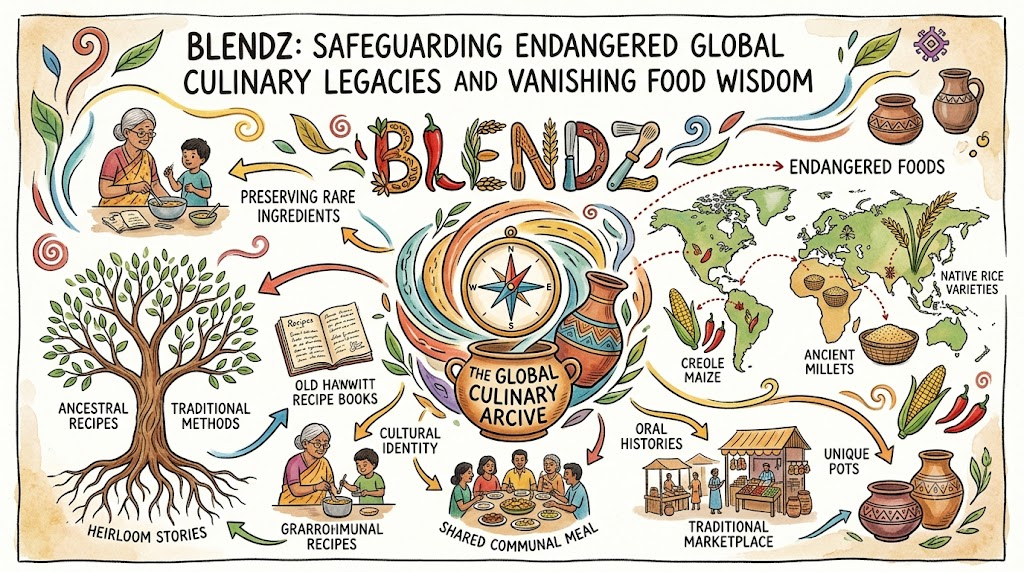
Blendz builds an expansive digital platform to record and protect vulnerable culinary knowledge worldwide. The project archives rare ingredients, forgotten recipes, and authentic community food stories before they disappear forever.
What Makes a Recipe “Forgotten”
Shifting societal priorities pull younger generations away from ancestral villages and slow-cooking practices. Ready-made convenience commodities dominate contemporary pantries, leading families to discard intricate, time-intensive culinary techniques.
Industrial agriculture also ignores regional heirloom crops to prioritize mass-yield commercial monocultures. As communities migrate away from rural lands, home cooks lose direct contact with native botanicals and specialized pottery tools.
Socioeconomic migrations, regional upheavals, and modern urban transitions further disrupt traditional oral storytelling across generations. Without daily kitchen repetition or dedicated written notes, delicate regional recipes disappear within two generations.
Key Drivers of Recipe Disappearance:
• Ultra-Processed Convenience: Mass-manufactured meals replacing slow braising and fermentation.
• Agricultural Homogenization: Modern commerce abandoning native grains and wild aromatics.
• Hectic Lifestyles: Less household time allocated to multi-generational cooking projects.
• Oral Gaps: Absence of structured digital systems to capture spoken kitchen traditions.
Rescuing these lost recipes demands meticulous historical research, community discussions, and persistent kitchen testing. Food historians analyze vintage family notebooks, oral memoirs, and elder advice to reconstruct authentic flavour profiles.
Grandmother Recipes: The Original Food Archive
Grandmother recipes serve as humanity’s most authentic and resilient culinary archives. Elder home cooks rarely consulted digital kitchen scales or precision timers when preparing unforgettable family feasts.
Instead, they monitored tactile cues, rich aromas, and the gentle bubbling rhythm of simmering pots. Their instinctive cooking methods delivered balanced daily nutrition, seasonal harmony, and extraordinary flavour depth.
Ancestral Intuition vs. Modern Measurement:
• Measurement Style: Intuitive pinches and visual cup ratios over electronic scales.
• Cooking Cues: Scent development and simmering audio rhythms over smartphone timers.
• Seasoning Approach: Adjustments based on ambient humidity, season, and family wellness.
• Ingredient Choice: Backyard garden greens and foraged herbs over store-bought spice pastes.
Furthermore, grandmother cooking showcases brilliant root-to-stem and nose-to-tail culinary philosophies. Resourceful cooks regularly turned leftover vegetable trimmings and bones into nutrient-packed broths, seasonal pickles, and hearty staples.
Cooking these heirloom dishes honors the tireless dedication of our ancestors while maintaining family traditions. When home cooks master grandmother recipes, they strengthen an enduring link to their cultural lineage.
Ancient Recipes and the Ingredients Behind Them
Ancient recipes connect contemporary dining rooms directly to early civilizations and legendary spice corridors. Early farming communities crafted distinct culinary routines around indigenous botanicals and unrefined heritage grains.
Intensive modern farming gradually pushed these diverse wild varieties aside in favor of uniform commercial crops. Consequently, countless wild greens, ancient millets, and regional aromatics vanished from ordinary neighbourhood markets.
| Heritage Category | Ancient Ingredient | Historical Origin | Modern Kitchen Use |
|---|---|---|---|
| Heritage Grains | Emmer & Einkorn | Fertile Crescent | Nutty sourdough loaves and slow-simmered porridges |
| Ancient Millets | Foxtail & Kodo | Ancient India & East Asia | Wholesome grain salads and steamed savoury cakes |
| Rare Aromatics | Mahleb (Cherry Seed) | Middle East | Fragrant celebration breads and holiday pastries |
| Wild Botanicals | Dried Black Limes | Ancient Persia | Tangy stews, robust braises, and savory herbal broths |
Reintroducing these rare ingredients restores crucial biodiversity to our fragile agricultural networks. Furthermore, ancient grains provide dense micronutrients, superior dietary fiber, and smoother digestion than modern hybrid wheat.
Festival Food Recipes: Where Culture and Cooking Meet
Festival food recipes highlight the creative soul and celebratory spirit of global civilizations throughout history. Communities created these elaborate festive dishes around astronomical alignments, harvest seasons, and cultural gratitude rituals.
Preparing festive meals demands collective energy, turning ordinary domestic kitchens into energetic hubs of community solidarity. Neighbors gather eagerly to fold delicate pastries, grind fresh spice pastes, and stir massive brass cauldrons for hours.
- Mid-Autumn Mooncakes: Families press rich lotus seed paste into ornate wooden moulds to celebrate autumn harmony.
- Harvest Pongal: Communities boil fresh rice with sweet sugarcane syrup in clay vessels to welcome abundant harvests.
- Persian Nowruz Sabzi Polo: Cooks prepare fragrant herb rice alongside seasoned fish to greet springtime renewal.
- Festive Mochi: Villagers rhythmically hammer steamed glutinous rice into chewy cakes to strengthen communal fellowship.
These celebratory dishes convey centuries of sacred folklore, generational blessings, and collective cultural perseverance. Preserving festival food recipes ensures future generations understand the profound philosophy behind their annual festivities.
Traditional Recipes From Around the World
Human societies developed clever, sustainable cooking methods uniquely fitted to their local terrain and climate. In Mexico, traditional cooks soften native corn with mineral limestone using stone metates through ancient nixtamalization.
Throughout Ethiopia, families ferment nutrient-rich teff flour batter over multiple days to yield airy, tangy injera. In coastal Japan, master cooks simmer sun-dried kelp and cured skipjack flakes to extract deeply satisfying dashi.
Regional Cooking Mastery Across Continents:
1. Clay-Pot Simmering (India): Seals in moisture while infusing subtle earthy minerals.
2. Earth Oven Steaming (Polynesia): Utilizes volcanic stone heat to slowly cook regional roots.
3. Brine Fermentation (Eastern Europe): Preserves garden vegetables for severe winter sustenance.
4. Stone Griddle Roasting (Latin America): Chars heirloom chilies to balance sweet and smoky notes.
Exploring traditional food recipes from around the world builds global empathy and deep intercultural appreciation. Authentic cuisine proves that despite our diverse geography, human communities share an identical passion for culinary creativity.
Why Preserving Food Heritage Matters Now
Monotonous industrial diets threaten culinary diversity by pushing mass-produced commodities into every global market. These processed foods steadily displace regional heirloom produce and distinct native seasoning traditions.
Crucial Reasons to Defend Global Food Heritage:
• Agricultural Resilience: Heirloom seeds withstand unpredictable climate shifts better than hybrids.
• Dietary Wellness: Diverse ancestral diets deliver broad arrays of essential minerals and antioxidants.
• Cultural Preservation: Regional cooking styles preserve unique ethnic identities and indigenous languages.
• Planetary Harmony: Traditional foraging and zero-waste cooking respect natural environmental limits.
Losing native culinary traditions also erases centuries of experiential wisdom regarding herbal remedies and wild nutrition. Ancestral cooks clearly understood how seasonal foraging and natural fermentation supported long-term vitality.
Protecting these culinary treasures safeguards essential survival knowledge and genetic diversity for upcoming generations. We must document traditional recipes before modern industrialization silences our remaining oral practitioners.
Keeping the Story Alive, One Recipe at a Time
Safeguarding our shared culinary legacy demands proactive kitchen action rather than passive academic interest. Storing old recipes in library archives can never match the cultural power of turning on a real kitchen stove.
Home cooks maintain culinary continuity by regularly preparing heritage recipes inside their modern apartments. When parents invite their children to fold traditional dumplings, family history travels forward into tomorrow.
Practical Habits for Daily Kitchen Preservation:
• Interview Elder Relatives: Record spoken family recipes, measuring methods, and contextual memories.
• Support Heirloom Growers: Purchase seasonal produce from independent growers cultivating rare crops.
• Organize Family Cooking Days: Gather extended relatives to prepare demanding seasonal dishes together.
• Follow Natural Seasons: Cook with local ingredients that reflect the immediate harvest cycle.
Each restored recipe builds a tangible bridge connecting ancestral culinary skill with modern dining tables. Cooking ancestral meals honors the inventive spirit of our ancestors in an authentic, delicious way.
Why Digital Archives Can Help
Spoken culinary lore remains vulnerable to memory lapses, sudden migration, and urban displacement. A centralized digital archive establishes an accessible, permanent sanctuary for endangered culinary traditions worldwide.
Digital systems convert subjective elder advice—such as approximate handfuls—into clear, repeatable kitchen measurements. Furthermore, modern online platforms store step-by-step videos, botanical directories, and historical backgrounds for global access.
Digital Archiving Framework:
1. Community Field Research: Gathering authentic family recipes, elder audio tapes, and local dialect names.
2. Recipe Verification: Testing ingredient proportions to guarantee accurate, reproducible results.
3. Structured Database Indexing: Categorizing files by origin, botanical rarity, and cultural rituals.
4. Universal Public Access: Distributing heritage food knowledge freely to cooks and historians worldwide.
Centralized digital repositories empower food lovers from opposing hemispheres to learn and collaborate without boundaries. By translating perishable oral methods into accessible digital records, technology ensures traditional wisdom remains forever vibrant.
Discover the World’s Culinary Heritage With Blendz
Blendz functions as a premier international culinary archive committed to documenting vanishing recipes and rare regional ingredients. The platform connects historic cooking wisdom with contemporary home kitchens through an organized digital network.
Culinary explorers can seamlessly browse an extensive database arranged by sovereign nations, rare botanicals, and festival foods. Blendz systematically records the spoken instructions of grandmothers, village cooks, and culinary historians worldwide.
The platform provides thorough historical context alongside precise, easy-to-follow steps for modern kitchens. Exhaustive ingredient glossaries empower home cooks to source or substitute heirloom millets, rare spices, and native herbs.
Whether you wish to master ancient fermentation methods or classic grandmother dishes, Blendz protects our collective culinary legacy. Enter the archive today to rediscover the timeless culinary masterpieces that shaped our world.
Frequently Asked Questions About Blendz
- What primary purpose defines the Blendz initiative?
Blendz operates as a dedicated global food archive that systematically documents, tests, and catalogs forgotten recipes, ancestral cooking techniques, and endangered botanical ingredients from every continent.
- Where does Blendz gather its traditional food recipes?
The team collects authentic regional recipes through primary field investigations, recorded conversations with village elders, experienced home grandmothers, cultural anthropologists, and local culinary historians.
- Why does Blendz emphasize the documentation of rare ingredients?
Endangered botanical ingredients embody irreplaceable agricultural biodiversity and historical wisdom, so cataloging them safeguards threatened crops from extinction while expanding nutritional variety in modern diets.
- Can home cooks discover seasonal festival food recipes on the platform?
Blendz showcases a broad collection of global festival dishes, detailing both their technical kitchen steps and their ceremonial meaning during harvest periods and cultural holidays.
- Does the platform feature ancient recipes from early human civilizations?
The archive presents thoroughly researched ancient cooking formulas, demonstrating how historical civilizations utilized clay vessels, underground roasting pits, and ancestral grains.
- How does Blendz adapt grandmother recipes for modern home kitchens?
Culinary specialists carefully test every oral grandmother recipe to provide standardized volume measurements and clear temperature guidelines suitable for modern domestic appliances.
- How does Blendz protect global culinary food heritage against extinction?
The platform creates a permanent digital database that prevents oral cooking knowledge from disappearing due to commercial urbanization, dietary homogenization, and intergenerational separation.
- Can users navigate the archive based on specific countries?
The Blendz repository organizes its vast culinary knowledge base cleanly by sovereign country, ecological region, primary ingredient, historical era, and festive celebration.
- Does Blendz offer advice on sourcing rare spices and heritage grains?
The platform supplies in-depth botanical profiles and sourcing directories that guide cooks in finding sustainable heirloom grains, wild botanicals, and authentic regional spice blends.
- Who benefits the most from utilizing the Blendz culinary database?
Amateur cooks, culinary researchers, professional chefs, nutritionists, and cultural historians who value authentic ancestral recipes and global gastronomic diversity benefit directly from the platform.
Final Thoughts
Rekindling traditional cooking practices reconnects our contemporary lives directly to ancestral origins, regional geography, and community roots. Preparing an authentic heritage meal honors the patience, resilience, and ingenuity of historic home cooks.
Pushing back against modern culinary uniformity requires conscious effort as factory-produced commodities flood grocery shelves worldwide. Rediscovering forgotten recipes injects bold flavours, superior micronutrients, and unforgettable cultural stories into every meal.
Open your pantry with genuine curiosity, experiment with heritage spices, and celebrate the enduring genius of traditional food recipes. Through everyday kitchen practice and collaborative digital archiving, we ensure these irreplaceable culinary traditions thrive for generations to come.

- Accelerating Modern Business Growth Through Intelligent Software Engineering And Scalable Cloud Architectures - September 5, 2026
- Building Resilient Enterprise Cloud Platforms Through Automation And Modern Reliability Engineering - September 5, 2026
- Building Resilient Software Platforms Through Modern Engineering And Enterprise Automation - September 4, 2026