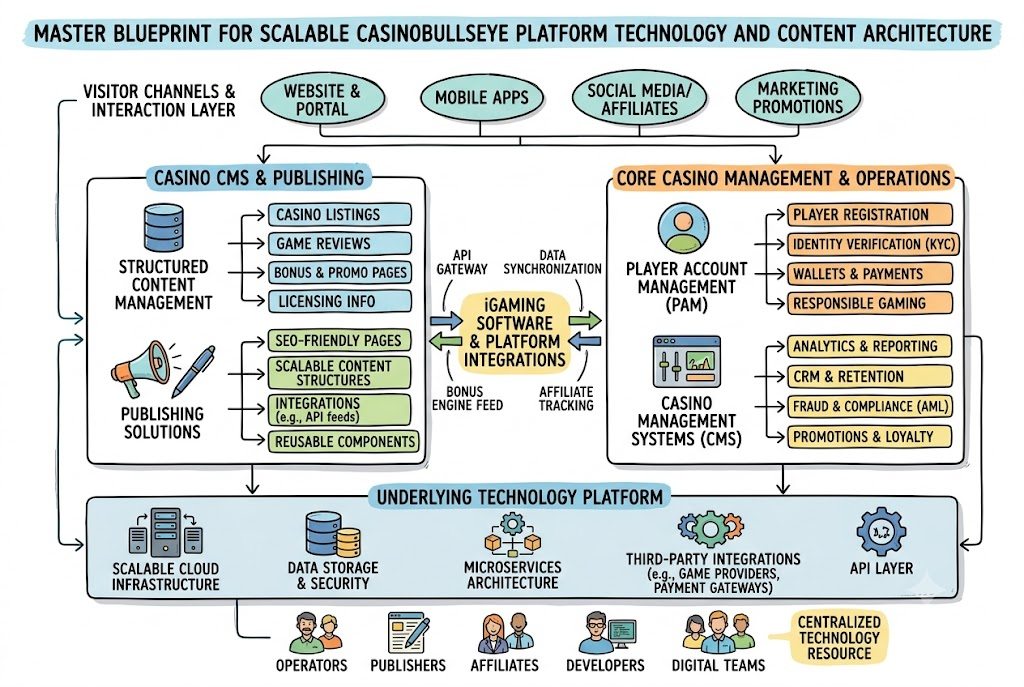
Modern digital gaming enterprises require purpose-built infrastructure to process millions of real-time transactions, manage relational media catalogs, and satisfy regional regulatory mandates across multiple jurisdictions. Standard website builders and generic database frameworks break down under high concurrent traffic and complex gaming data relationships. Therefore, operators, media publishers, and engineering leads deploy dedicated software stacks to run their operations efficiently. CasinoBullseye delivers practical architectural analysis, deep software breakdowns, and direct platform comparisons, empowering teams to build scalable, high-converting digital portals.
Building a dependable gaming footprint involves balancing fast front-end delivery with real-time transactional security. By choosing dedicated tools over generic software, organizations eliminate administrative bottlenecks, maintain strict data integrity, and accelerate market expansion.
Core Mechanics of a Modern Casino CMS
A modern casino CMS functions as a specialized relational engine engineered specifically for digital entertainment taxonomies. Generic publishing engines treat articles as isolated documents, forcing content teams to update duplicate data points manually across dozens of pages. In contrast, a purpose-built casino content management system structures operator profiles, bonus playthrough terms, game libraries, payment methods, and user ratings as connected database entities.
Editorial teams update a bonus code or withdrawal limit once inside the master administrative console, and the platform pushes that update across every live comparison table, review guide, and dynamic sidebar widget. This global data synchronization protects digital publishers from publishing outdated terms, cuts editorial overhead, and ensures absolute data consistency across global web properties.
Furthermore, built-in schema generators within a dedicated content system ensure search engines understand real-time ratings, operator licensing details, and review metrics. Thus, engineering teams reduce manual coding requirements while marketing teams launch multi-region campaigns with high structural precision.
How Casino Management Software Operates
At the operational core, casino management software handles continuous communication between player-facing front ends and back-office transactional engines. This platform validates user registrations, tracks active session durations, executes real-time deposits, and processes payout requests without operational latency.
[ User Interaction ] ──► [ Core Engine Logic ] ──► [ Payment & Identity Hub ]
                                  │
                                  ▼
                     [ Real-Time Audit Records ]
Because international regulatory bodies mandate comprehensive financial tracking, the software generates automated, tamper-proof audit trails for every wager and account adjustment. Operations managers utilize unified analytics dashboards to track key performance indicators, monitor gross revenue numbers, and trigger immediate alerts for anomalous account activity. Consequently, reliable casino management systems transform complicated backend tasks into unified, automated procedures.
Understanding the Modern iGaming Software Ecosystem
The wider iGaming software landscape brings together diverse technologies into a unified player experience. This ecosystem coordinates third-party game studios, sports betting odds engines, random number generators, live dealer video streams, and payment clearinghouses.
Engineering teams deploy iGaming software platforms using scalable microservices and robust API protocols to process thousands of simultaneous bets per second. When a visitor wagers on a game or joins a multiplayer table, the platform updates account ledgers in milliseconds without UI lag. Furthermore, modern platform suites incorporate responsible gaming modules directly, allowing users to configure self-imposed deposit limits, session timers, and temporary cooling-off periods.
Key Capabilities of Dedicated Gaming Infrastructure
High-performance casino software combines modularity, ultra-low latency, and resilient security frameworks to protect operator profitability and maintain player trust.
- Unified Player Account Dashboards: Consolidates multi-currency wallets, KYC verification statuses, and cross-platform betting activity into a single player profile.
- Intelligent Bonus Engines: Calculates dynamic wagering progress, multi-tier VIP loyalty points, automated cashback distributions, and tournament leaderboards.
- Standardized Webhook Integrations: Connects third-party game aggregators, geolocation validation services, risk monitoring tools, and payment gateways via clean APIs.
- Omnichannel Account Continuity: Links user balances, reward points, and account histories smoothly across mobile native apps, web browsers, and retail gaming kiosks.
- Automated Compliance Modules: Assembles tax records, player safety reports, and anti-money laundering audit files without manual spreadsheet management.
Distinguishing Dedicated Platforms from Generic Tools
General-purpose content management systems fail when organizations must manage deep relational data queries and dynamic country-level restrictions, whereas dedicated iGaming CMS solutions execute these functions natively:
- Data Structure: Generic web builders use flat pages, basic tags, and static posts, while a dedicated iGaming CMS uses relational entities including operators, bonuses, games, and ratings.
- Site-Wide Updates: Traditional systems require manual editing across every individual post, whereas specialized platforms apply single-point updates globally across all pages.
- Geographic Targeting: Standard builders rely on slow, fragile third-party plugins, while dedicated systems incorporate native geographic redirection and dynamic disclosures.
- Schema Generation: Standard tools generate basic text markup, whereas dedicated gaming software generates rich snippets for reviews, ratings, and gaming data automatically.
- Database Speeds: Generic platforms suffer frequent latency spikes during complex filtering, while specialized engines use database indexing optimized for deep multi-attribute queries.
Accelerating Publishing Cycles with Casino Website Software
Editorial departments managing high-volume review portals rely on specialized casino platform software and publishing tools to speed up their release cycles. Writers continuously track changing bonus terms, payment options, and software studio partnerships across hundreds of casinos.
A centralized database simplifies this publishing workload. Writers focus on crafting insightful, high-value reviews while the software automatically inserts updated promotional widgets, accurate deposit options, and live star ratings. Consequently, digital media groups expand their multi-regional publishing footprint without risking factual discrepancies or degraded page speeds.
Structural Categories of Casino Management Systems
Organizations deploy different casino software frameworks depending on whether they operate physical venues, digital web portals, or performance marketing networks.
- Land-Based Management Suites: Tracks physical gaming machine operations, cage accounting, physical loyalty card programs, and on-premise security.
- Digital Platform Solutions: Orchestrates cloud-based player accounts, virtual wallet APIs, payment routing, and automated retention marketing campaigns.
- Hybrid Enterprise Platforms: Unifies retail loyalty cards with digital profiles, allowing customers to use a single balance across land-based and digital venues.
- Affiliate Media Systems: Tracks outbound campaign attribution, referral commissions, dynamic link redirections, and database-driven content modules.
Evaluating Critical Software Features
Technical decision-makers must evaluate prospective software stacks against clear architectural benchmarks before committing development resources.
- API Extensibility: Verify that the platform provides clean REST or GraphQL endpoints along with responsive webhooks for seamless third-party connections.
- Granular Role-Based Permissions: Implement restrictive permission controls that prevent unauthorized employees from accessing sensitive player records or adjusting balance ledgers.
- Global Edge Performance: Confirm that the software integrates with modern content delivery networks to serve media assets instantly to international users.
- Dynamic Geolocation Compliance: Ensure the system automatically adjusts promotional offers, currencies, and required legal notices to match the visitor’s location.
- Actionable Analytics Reporting: Inspect the reporting interface to confirm it surfaces clear data on player conversion funnels, churn rates, and operational overhead.
How Platform Hubs Unify Distributed Microservices
Modern iGaming ecosystems operate as interconnected webs of independent microservices rather than monolithic legacy blocks. The core iGaming platform serves as an intelligent router, transferring data securely between specialized third-party services.
When a user initiates a withdrawal, the central API gateway queries identity databases for KYC clearance, adjusts the primary ledger balance, and sends execution instructions to the designated payment processor. Event-driven architectures update front-end interfaces immediately, creating a frictionless user journey while preserving absolute financial accuracy.
Practical Technology Discovery with CasinoBullseye
CasinoBullseye simplifies technical discovery by providing unbiased platform evaluations, architectural guides, and software comparisons. As digital gaming software becomes more specialized, accessing clear technical insights helps stakeholders make confident platform investments.
The resource delivers detailed analyses of dedicated content platforms, operational management engines, and API integration tools. By translating complex technical features into practical business benefits, CasinoBullseye helps digital teams select the right technology stack, streamline their workflows, and achieve long-term growth.
Frequently Asked Questions
- Which core capabilities distinguish a gaming CMS from standard website software?
A dedicated gaming content system integrates structured relational databases that link casinos, bonus mechanics, payment systems, and user ratings, allowing site-wide updates from a central database record.
- How do single-point content updates reduce publishing errors?
Single-point updates push modifications made inside one central data field directly to every related comparison table, review page, and banner, eliminating mismatched information across the site.
- In what way does microservices architecture improve gaming platform stability?
Microservices isolate specific platform functions—such as payment processing, bonus calculations, and game catalogs—into independent services, preventing a single component failure from taking the entire platform offline.
- Why do affiliate publishers need automated geolocation features?
Automated geolocation filters user locations to show only compliant, locally licensed operator brands, correct currencies, and mandatory regional legal disclaimers.
- What operational tasks does a casino management platform automate?
The software automates player identity verification, real-time transaction clearing, promotional bonus crediting, fraud alerts, and regular compliance reporting.
- How does an API gateway facilitate third-party game integration?
An API gateway standardizes communication between the operator’s core player wallet and external game studio servers, enabling real-time balance checks and instant game round settlement.
- What protections keep player records secure in modern gaming systems?
Modern systems protect user records using strong data encryption, automated KYC compliance pipelines, tokenized payment methods, and strict role-based employee access controls.
- Why is structured schema markup critical for gaming media portals?
Structured schema markup provides explicit rating, pricing, and entity data to search engine crawlers, boosting page comprehension and securing rich search snippets.
- Can hybrid casino platforms manage physical and online venues simultaneously?
Hybrid platforms link land-based player tracking cards to digital profiles, creating a unified player wallet and shared loyalty rewards across both environments.
- How does headless software architecture empower development teams?
Headless architecture decouples the front-end presentation layer from the backend database, allowing developers to craft bespoke, ultra-fast user interfaces without backend constraints.
Navigating the competitive digital entertainment market requires pairing specialized content systems with resilient platform management tools. Implementing purpose-built architectures empowers organizations to eliminate administrative friction, maintain strict compliance standards, and deliver exceptional user experiences. Thorough software research and continuous technical evaluation provide the foundation for building an enduring, scalable gaming enterprise.

- Accelerating Modern Business Growth Through Intelligent Software Engineering And Scalable Cloud Architectures - September 5, 2026
- Building Resilient Enterprise Cloud Platforms Through Automation And Modern Reliability Engineering - September 5, 2026
- Building Resilient Software Platforms Through Modern Engineering And Enterprise Automation - September 4, 2026