Introduction
AI Software Testing Tools have transformed the software development lifecycle in 2026. These intelligent testing platforms use Artificial Intelligence to automate test creation, execution, defect detection, UX validation, regression testing, and performance monitoring with remarkable precision. As software systems grow more complex and release cycles become shorter, organizations rely on AI-powered tools to reduce manual workload, minimize bugs, and accelerate delivery.
The best AI Software Testing Tools combine machine learning, predictive analytics, autonomous test generation, and self-healing capabilities to make testing faster, smarter, and more efficient. When choosing a tool, users should look for ease of integration, multi-platform testing support, accuracy, scalability, low maintenance, and cost-effectiveness.
Below are the Top 10 AI Software Testing Tools in 2026, along with detailed features, pros, cons, and comparisons to help you select the right solution.
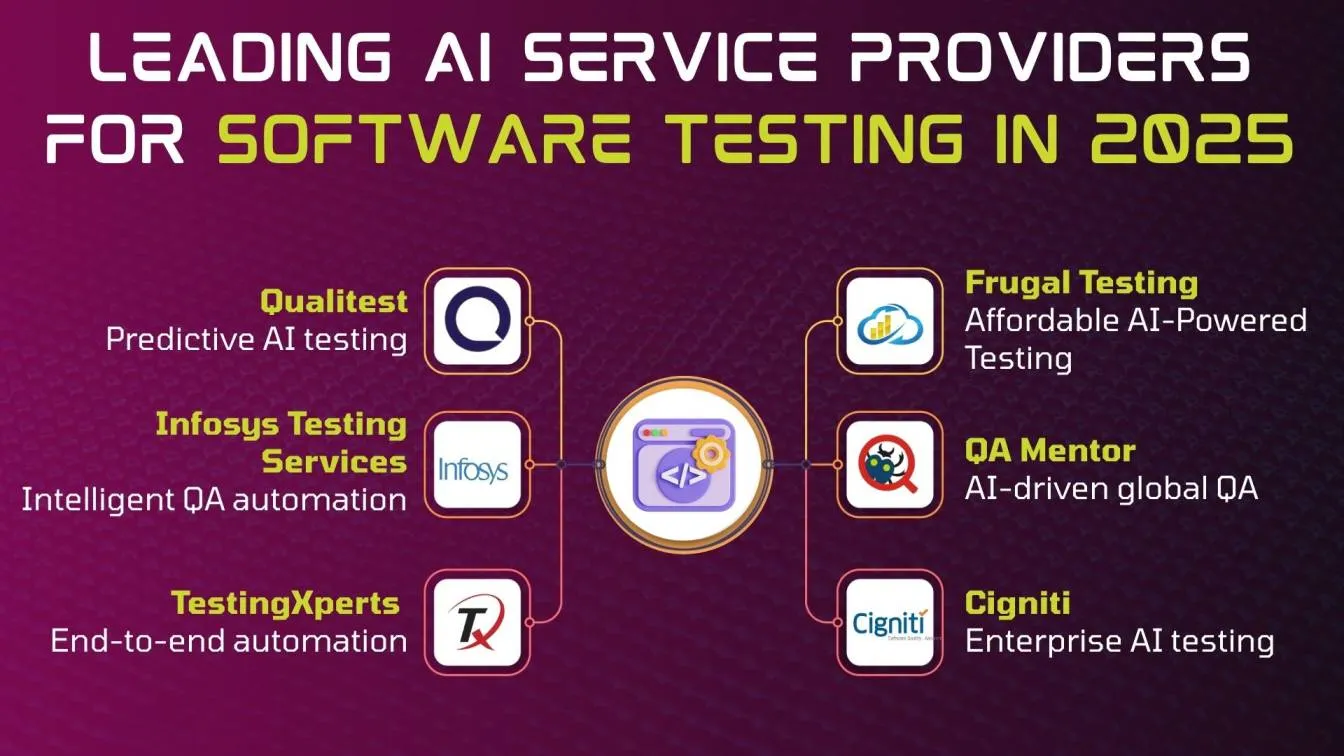
Top 10 AI Software Testing Tools in 2026
1. Testim AI
Short Description
Testim AI uses machine learning to create stable, fast, and self-healing automated test cases. Ideal for QA teams looking for scalable test automation.
Key Features
- AI-based self-healing tests
- Visual test editor for quick test creation
- Parallel execution support
- CI/CD integrations
- API + UI testing
- Smart locators for element recognition
Pros
- Very low maintenance
- Easy for beginners
- Strong stability with dynamic UI changes
Cons
- Pricing is on the higher side
- Limited open-source flexibility
- Requires initial configuration
2. Mabl
Short Description
Mabl is an intelligent test automation platform offering end-to-end testing with built-in AI insights. Ideal for web apps and cross-browser automation.
Key Features
- Auto-healing scripts
- Cross-browser testing
- Visual regression testing
- API testing included
- Performance insights powered by AI
- Easy CI/CD pipeline integration
Pros
- Very user-friendly
- Great documentation
- AI-driven quality insights
Cons
- No mobile testing support
- Can be expensive for startups
- Requires cloud connectivity
3. Applitools Eyes
Short Description
An AI-driven visual testing platform that identifies UI anomalies across browsers and devices. Ideal for design-heavy applications.
Key Features
- Visual AI testing
- Layout comparison engine
- Cross-browser and cross-device support
- Integrates with Selenium, Cypress, etc.
- Ultrafast grid for quick testing
- Supports image-based validation
Pros
- Best-in-class visual testing
- Fast execution speed
- Excellent integration ecosystem
Cons
- Not ideal for end-to-end functional testing
- Pricing is enterprise-focused
- Requires learning curve for visual baselines
4. Selenium AI Extensions (Selenium + AI Add-ons)
Short Description
AI-enhanced Selenium frameworks that bring intelligence to traditional Selenium automation. Ideal for teams wanting AI benefits without switching platforms.
Key Features
- Smart locators and adaptive waits
- AI-based script stability
- Visual validation integrations
- Self-healing capabilities
- Large community support
Pros
- Open-source flexibility
- Works with existing Selenium setups
- Highly customizable
Cons
- Not a full AI testing suite
- Requires development expertise
- Slower compared to cloud-managed tools
5. Functionize
Short Description
An AI-powered autonomous testing platform that automatically creates and executes test cases using NLP and machine learning.
Key Features
- Natural language test creation
- Autonomous test generation
- Self-healing tests
- Cloud execution
- Visual testing capabilities
- API testing included
Pros
- Very high automation coverage
- Reduces manual scripting
- Enterprise-ready
Cons
- Premium pricing
- Overwhelming for beginners
- Requires good test strategy planning
6. Katalon TestOps + Katalon Studio AI
Short Description
Katalon adds AI-enhanced test automation to its already popular testing ecosystem. Ideal for teams wanting a complete testing lifecycle solution.
Key Features
- Self-healing technology
- AI-based locator selection
- Mobile, web, API testing support
- TestOps real-time dashboards
- CI/CD pipeline support
- Cross-browser/cloud execution
Pros
- Great blend of free + paid features
- Very flexible
- Strong community support
Cons
- Requires powerful systems for local execution
- Some features locked behind premium versions
- UI can feel crowded
7. TestSigma
Short Description
A low-code AI-powered test automation tool designed for teams that want easy test creation using plain English.
Key Features
- NLP-based test creation
- Self-healing capabilities
- Web + mobile + API testing
- Cloud-hosted execution
- Reusable test steps
- CI/CD integration
Pros
- Extremely beginner-friendly
- Fast test creation
- Supports wide platform coverage
Cons
- Not ideal for highly complex logic
- Cloud dependency
- Limited offline functionality
8. Perfecto Scriptless AI
Short Description
Perfecto’s AI-powered scriptless testing platform is ideal for enterprise-grade mobile and web testing at scale.
Key Features
- Scriptless AI testing
- Multi-device and cross-browser testing
- Visual and functional testing
- Heatmaps and analytics
- CI/CD support
- Cloud device lab
Pros
- Excellent for mobile testing
- Very scalable
- Reliable cloud device infrastructure
Cons
- Pricing is premium
- Some learning curve for AI workflows
- Limited customization for advanced users
9. Tricentis Tosca (AI Upgraded)
Short Description
Tosca combines model-based and AI-powered testing for enterprise automation across SAP, web, APIs, and desktop applications.
Key Features
- AI-assisted test creation
- Model-based test automation
- Cross-platform testing
- SAP testing support
- Reusable test components
- Strong audit and compliance features
Pros
- Enterprise-ready
- Great for SAP-heavy organizations
- Reduces test maintenance significantly
Cons
- Very expensive
- Steep learning curve
- Requires strong test planning
10. Appvance IQ
Short Description
Appvance IQ uses generative AI to create thousands of test cases autonomously, ideal for performance, security, and functional testing.
Key Features
- AI-driven autonomous test creation
- Load and performance testing
- Security insights
- Real-time analytics
- Multi-platform testing
- Cloud execution
Pros
- Extremely high automation coverage
- Great for performance + functional testing
- Strong AI analytics
Cons
- Not suitable for small teams
- Expensive enterprise pricing
- May require advanced expertise
Comparison Table: Top 10 AI Software Testing Tools in 2026
| Tool Name | Best For | Platforms Supported | Standout Feature | Pricing | Ratings |
|---|---|---|---|---|---|
| Testim AI | QA teams | Web | AI self-healing | Starts at $99/mo | 4.6/5 |
| Mabl | SMEs, QA | Web | AI insights | Custom | 4.5/5 |
| Applitools | UI-heavy apps | Web/Mobile | Visual AI | Starts at $45/mo | 4.7/5 |
| Selenium AI | Developers | Web | Smart locators | Free | 4.5/5 |
| Functionize | Enterprises | Web | NLP test creation | Custom | 4.4/5 |
| Katalon | QA teams | Web/Mobile/API | Low-code AI | Free + Paid | 4.6/5 |
| TestSigma | Beginners | Web/Mobile/API | NLP-based tests | Starts at $49/mo | 4.4/5 |
| Perfecto AI | Enterprises | Web/Mobile | Scriptless AI | Custom | 4.5/5 |
| Tricentis Tosca | Large enterprises | Web/Desktop/SAP | Model-based + AI | Custom | 4.6/5 |
| Appvance IQ | Enterprises | Web/Mobile | Autonomous test creation | Custom | 4.3/5 |
Which AI Software Testing Tool is Right for You?
Choosing the right tool depends on company size, budget, and testing needs.
Choose Testim AI if:
- You want stable AI-powered UI test automation
- You have dynamic UIs or frequent releases
Choose Mabl if:
- You want simple yet powerful AI-driven web testing
- You prefer cloud-based insights and analytics
Choose Applitools if:
- UI/UX validation is your top priority
- You want the best visual testing engine
Choose Selenium AI if:
- You need open-source + AI capabilities
- You prefer full customization
Choose Functionize if:
- You want autonomous test generation using NLP
- You’re an enterprise with large-scale testing
Choose Katalon if:
- You need a complete, affordable testing ecosystem
- You want AI + low-code together
Choose TestSigma if:
- You prefer English-based test creation
- You’re a startup or mid-sized team
Choose Perfecto if:
- Mobile testing is your main focus
- You want a cloud device lab
Choose Tricentis Tosca if:
- You are an enterprise with SAP or legacy systems
- You need heavy compliance + test governance
Choose Appvance IQ if:
- You need autonomous AI-driven test generation at massive scale
- You’re focused on performance and security
Conclusion
AI Software Testing Tools are redefining how companies ensure product quality in 2026. With AI-driven automation, visual validation, self-healing tests, and predictive analytics, teams can achieve faster releases, fewer bugs, and more reliable user experiences. The right tool depends on your testing maturity, platform needs, and budget. Most of these platforms offer free trials—explore them to find the perfect fit for your organization.
FAQs
1. What are AI Software Testing Tools?
They are platforms that use AI to automate, optimize, and enhance software testing processes.
2. Which AI testing tool is best for beginners?
TestSigma and Katalon are excellent for beginners.
3. Which tool is best for UI testing?
Applitools Eyes offers industry-leading visual testing.
4. Which AI tool supports the most platforms?
Tricentis Tosca supports web, SAP, API, desktop, and more.
5. What is the cheapest AI testing tool?
Selenium AI extensions (open-source) and Katalon free edition.

- Top 10 AI Model Serving Frameworks Tools in 2026: Features, Pros, Cons & Comparison - August 30, 2026
- Top 10 Construction Management Software Tools in 2026: Features, Pros, Cons & Comparison - August 11, 2026
- Top 10 AI Academic Writing Tools in 2026: Features, Pros, Cons & Comparison - August 11, 2026