Introduction
Responsible AI is no longer optional in 2026—it is essential. As artificial intelligence continues to power business decisions, automate workflows, and influence everyday life, the need for transparent, fair, explainable, and safe AI systems has become critical. Responsible AI Frameworks tools provide structured methodologies, governance models, fairness testing, bias mitigation, risk assessment, model explainability, and compliance monitoring to ensure AI behaves ethically and aligns with regulations.
Organizations today look for tools that offer end-to-end Responsible AI capabilities, including data transparency, audit trails, explainable ML, fairness evaluation, and regulatory compliance (such as GDPR, EU AI Act, ISO/IEC standards). Choosing the right Responsible AI framework depends on factors like company size, the complexity of AI workflows, industry regulations, and availability of governance tools.
This blog presents the Top 10 Responsible AI Frameworks Tools in 2026, complete with features, pros/cons, comparison tables, and recommendations to help you select the best solution.
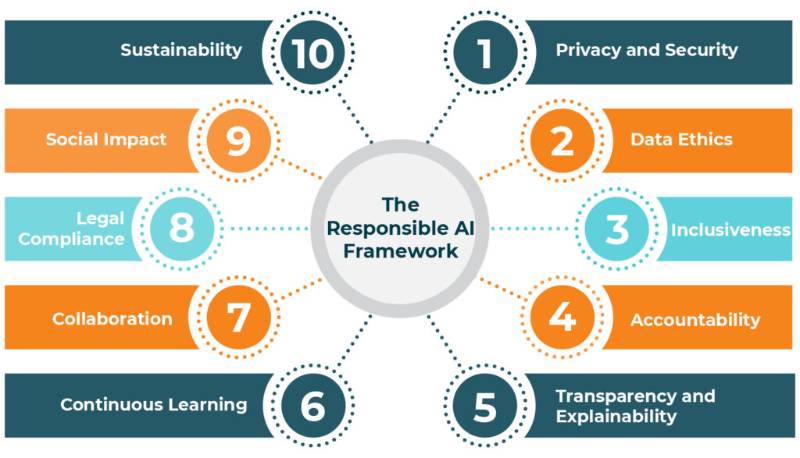
Top 10 Responsible AI Frameworks Tools (2026)
1. Microsoft Responsible AI Toolbox
Short Description: A comprehensive suite for fairness analysis, model interpretability, causal evaluation, and risk assessment built by Microsoft for enterprise AI governance.
Key Features
- Fairlearn fairness assessment toolkit
- InterpretML for explainable AI
- Error analysis dashboards
- Causal inference tools
- Model debugging and insights
- Integrates with Azure Machine Learning
Pros
- Open-source and enterprise-ready
- Strong fairness and explainability tools
- Excellent documentation
Cons
- Best suited for Azure users
- Requires technical expertise
- Limited automated compliance workflows
2. Google Responsible AI Toolkit
Short Description: Google’s responsible AI stack includes Explainable AI, Model Cards, Fairness Indicators, and what-if analysis tools for ethical model development.
Key Features
- Fairness Indicators library
- Explainable AI (XAI) dashboard
- Model Card Toolkit
- Inclusive ML tools
- TensorFlow and Vertex AI integration
Pros
- Developer-friendly
- Strong visualization tools
- Built-in with Google Cloud ecosystem
Cons
- Requires GCP for full capabilities
- Limited governance scoring
- Not ideal for non-technical teams
3. IBM AI Governance (Watson OpenScale)
Short Description: A robust AI governance and monitoring platform offering bias detection, drift monitoring, explainability, and automated compliance.
Key Features
- Bias monitoring in real time
- Automatic model monitoring and alerts
- Explainability dashboards
- Data drift detection
- Compliance and governance tools
- Multi-cloud integration
Pros
- Strong enterprise governance
- Automated compliance workflows
- Works with any ML platform
Cons
- Expensive
- Complex to set up
- Requires enterprise-level data maturity
4. Fiddler AI
Short Description: A leading Responsible AI platform offering model explainability, transparency, fairness analysis, and monitoring.
Key Features
- Explainable AI for black-box models
- Real-time monitoring
- Fairness and bias detection
- Drift and performance insights
- Role-based access control
- API integrations
Pros
- Intuitive UI
- Fast, accurate explainability
- Great for regulated industries
Cons
- Pricing is premium
- Setup requires expertise
5. WhyLabs AI Observatory
Short Description: A powerful AI data observability platform focused on monitoring, fairness, drift, and risk analysis.
Key Features
- Data quality monitoring
- Model drift detection
- Bias scanning
- Automated reporting
- Real-time anomaly alerts
- Integrates with popular ML pipelines
Pros
- Ideal for continuous monitoring
- Highly scalable
- Strong data observability
Cons
- Lacks deep explainability tools
- Requires external governance integration
6. Hugging Face Ethics & Governance Tools
Short Description: Open-source AI governance libraries and model evaluation frameworks for ethical AI development.
Key Features
- Model evaluation cards
- Responsible AI scorecards
- Bias detection datasets
- Open-source governance templates
- Transparency and audit tools
Pros
- 100% free and open-source
- Great for research teams
- Community-driven
Cons
- Not enterprise-ready alone
- Lacks automated monitoring
7. Arthur AI
Short Description: A model monitoring platform offering fairness checks, performance analysis, and explainable AI insights.
Key Features
- Model explainability
- Fairness assessment
- Data drift and bias monitoring
- Performance dashboards
- Multi-cloud support
Pros
- Strong explainability tools
- Works with all major ML frameworks
- Good for real-time applications
Cons
- Pricing not transparent
- Requires initial configuration effort
8. Truera AI Quality Platform
Short Description: A specialized AI quality assurance platform for fairness, robustness, explainability, and data intelligence.
Key Features
- Fairness testing tools
- Model debugging insights
- Explainability for complex models
- Monitoring dashboards
- Governance workflows
Pros
- Ideal for enterprise AI teams
- Deep, actionable insights
- Strong bias mitigation tools
Cons
- Premium pricing
- Requires expert users
9. Accenture Responsible AI Framework
Short Description: A consulting-driven Responsible AI governance framework customized for large enterprises.
Key Features
- AI governance consulting
- Compliance and risk frameworks
- Model transparency guidelines
- Data responsibility standards
- Industry-specific templates
Pros
- Tailored for enterprises
- Includes strategic & operational guidance
- Great for regulated sectors
Cons
- Consulting-based (expensive)
- Not a standalone product
10. AWS Responsible AI & Model Governance Tools
Short Description: AWS offers fairness tools, explainability, governance workflows, and AI safety mechanisms across SageMaker and cloud services.
Key Features
- SageMaker Clarify (bias detection)
- SageMaker Model Monitor
- Transparency & lineage tracking
- Governance workflows
- Secure ML pipelines
- Compliance features
Pros
- Deep AWS cloud integration
- Strong bias and drift tools
- Good automation for pipelines
Cons
- Best for AWS-native teams
- Pricing can scale quickly
Comparison Table: Top 10 Responsible AI Frameworks Tools
| Tool Name | Best For | Platforms Supported | Standout Feature | Pricing | Ratings |
|---|---|---|---|---|---|
| Microsoft Responsible AI Toolbox | Developers, Enterprises | Windows, Azure, Open-source | Explainability suite | Free/Open-source | 4.6/5 |
| Google Responsible AI Toolkit | ML teams on GCP | Web, GCP | Model Cards + Fairness Indicators | Free | 4.5/5 |
| IBM AI Governance (OpenScale) | Large enterprises | Cloud, Hybrid, On-prem | Automated bias monitoring | Custom | 4.7/5 |
| Fiddler AI | Regulated industries | Cloud, Web | Explainable AI + Monitoring | Custom | 4.6/5 |
| WhyLabs | Data teams | Cloud, Hybrid | Data observability | Starts $99/mo | 4.5/5 |
| Hugging Face Governance Tools | Researchers | Open-source | Transparent governance | Free | 4.4/5 |
| Arthur AI | Enterprises | Cloud, API | Fairness + performance monitoring | Custom | 4.5/5 |
| Truera | AI-heavy enterprises | Cloud, On-prem | Deep fairness testing | Custom | 4.6/5 |
| Accenture Responsible AI | Enterprises | Consulting | Custom governance frameworks | Custom | 4.8/5 |
| AWS Responsible AI | AWS-native teams | Cloud | SageMaker Clarify | Pay-as-you-go | 4.6/5 |
Which Responsible AI Framework Tool Is Right for You?
Based on Company Size
- Startups: Hugging Face, Microsoft Toolbox
- Mid-size Companies: WhyLabs, Fiddler AI
- Large Enterprises: IBM OpenScale, Truera, Accenture, AWS
Based on Use Case
- Bias Detection: Microsoft, Google, AWS
- Explainability: Fiddler AI, Arthur AI
- Compliance & Governance: IBM, Accenture
- Data Quality Monitoring: WhyLabs
- Research & Model Evaluation: Hugging Face
Based on Budget
- Free/Open-source: Microsoft Toolbox, Google Toolkit, Hugging Face
- Affordable: WhyLabs
- Premium: IBM, Fiddler, Truera
Conclusion
Responsible AI Frameworks are critical in 2026 as AI adoption accelerates across every industry. These tools help organizations ensure fairness, transparency, safety, and ethical integrity in AI systems. From open-source libraries for researchers to enterprise-grade governance platforms for compliance-heavy sectors, the Responsible AI ecosystem provides solutions for every need.
As global regulations evolve—particularly the EU AI Act—businesses must adopt responsible AI tools to stay compliant and trustworthy. Explore demos, test governance workflows, and choose a tool aligned with your infrastructure and ethical requirements.
FAQs
1. What is a Responsible AI Framework?
A Responsible AI Framework defines processes, tools, and guidelines to ensure AI systems are ethical, fair, and compliant.
2. Which tool is best for responsible AI compliance?
IBM OpenScale and Accenture are top choices for enterprise compliance.
3. Which tool is best for free responsible AI development?
Microsoft Responsible AI Toolbox and Hugging Face are the best open-source options.
4. Do these tools help avoid AI bias?
Yes—most tools include fairness testing, bias detection, and mitigation mechanisms.
5. Which tool is best for explainable AI?
Fiddler AI and Arthur AI offer the strongest explainability platforms.

- Top 10 AI Model Serving Frameworks Tools in 2026: Features, Pros, Cons & Comparison - August 30, 2026
- Top 10 Construction Management Software Tools in 2026: Features, Pros, Cons & Comparison - August 11, 2026
- Top 10 AI Academic Writing Tools in 2026: Features, Pros, Cons & Comparison - August 11, 2026