Introduction
Data privacy has become one of the most critical concerns for organizations across industries. With privacy regulations like GDPR, CCPA, HIPAA, and India’s DPDP Act redefining compliance standards, companies must ensure that sensitive user information is protected at all levels. AI Data Anonymization Tools help businesses mask, tokenize, encrypt, obfuscate, or synthesize sensitive data to prevent exposure while still retaining analytical value.
In 2026, these tools have become smarter, faster, and more compliant, thanks to advancements in artificial intelligence and machine learning. AI-driven anonymization ensures higher accuracy, context-awareness, automated detection of sensitive fields, and minimal manual effort.
When choosing the best AI Data Anonymization Tools, users should evaluate: security standards, anonymization techniques (masking, tokenization, synthetic data), scalability, cloud/on-prem compatibility, ease of integration, compliance features, and cost.
This blog covers the Top 10 AI Data Anonymization Tools in 2026, including features, pros, cons, comparison table, FAQs, and a decision guide.
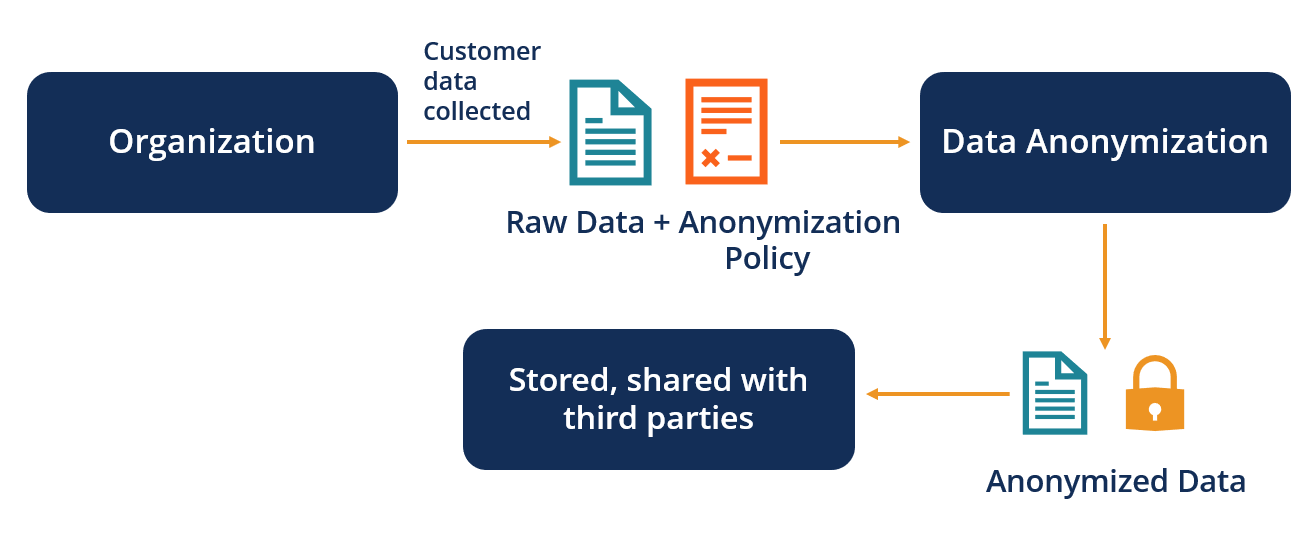
Top 10 AI Data Anonymization Tools in 2026
1. Google Cloud DLP (Data Loss Prevention)
Short Description: Google Cloud DLP automatically discovers, classifies, and anonymizes sensitive data across cloud and on-prem systems. Ideal for enterprises requiring advanced compliance.
Key Features
- AI-based sensitive data detection
- Masking, tokenization, redaction, bucketing
- Integration with BigQuery, Cloud Storage, SQL
- Pre-built detectors for 120+ data types
- Real-time DLP API
- Compliance-ready templates
Pros
- Highly accurate detection
- Scales well for large data workloads
- Strong Google ecosystem integration
Cons
- Not ideal for small businesses
- Pricing can be high for real-time APIs
- Best performance within Google Cloud
2. Microsoft Azure Purview (Microsoft Purview Data Governance)
Short Description: Microsoft Purview offers AI-driven data classification, lineage, and anonymization for hybrid and multi-cloud environments.
Key Features
- AI-powered classification and labeling
- Masking policies for SQL & Synapse
- Sensitive data discovery across cloud + on-prem
- Auto-generation of compliance reports
- Metadata scanning and governance dashboard
Pros
- Deep integration with Microsoft stack
- Easy policy-based anonymization
- Enterprise-grade compliance tools
Cons
- Complex for beginners
- Requires Azure environment for full features
3. IBM Data Privacy Passports
Short Description: IBM provides secure data anonymization and privacy enforcement across hybrid infrastructures using AI-driven protection rules.
Key Features
- Centralized data privacy controls
- Dynamic data masking
- End-to-end encryption and tokenization
- Identity-based access control
- Automated compliance workflows
Pros
- Excellent for large regulated industries
- Strong security and auditing
Cons
- Expensive deployment
- Requires training to manage complexity
4. Privitar
Short Description: A leading enterprise-level data anonymization platform offering compliance-friendly de-identification and data minimization.
Key Features
- K-anonymity, differential privacy
- Masking, tokenization, generalization
- Policy management system
- Risk analysis engine
- On-prem + cloud compatible
Pros
- Highly secure and mature solution
- Strong governance features
Cons
- Premium pricing
- Better suited for large enterprises
5. Tonic.ai
Short Description: A synthetic data platform that uses AI to generate realistic anonymized datasets for development, testing, and analytics.
Key Features
- AI-driven synthetic data generation
- Schema-aware dataset models
- Anonymization via pseudonymization
- GDPR/CCPA-compliant workflows
- Integrations with SQL, Snowflake, Databricks
Pros
- Extremely realistic synthetic data
- Great for DevOps, QA, and testing teams
Cons
- Not focused on real-time anonymization
- Premium pricing for large datasets
6. Anonos DataVault
Short Description: A privacy-enhancing technology platform providing AI-powered data anonymization, pseudonymization, and privacy transformation.
Key Features
- Variant Twins (synthetic data + tokens)
- Dynamic de-identification
- Context-aware AI data masking
- Workflow automation
- Global compliance engine
Pros
- Very strong legal/compliance focus
- Hybrid approach (synthetic + masked)
Cons
- Configuration can be complex
- Enterprise-focused pricing
7. Securiti.ai (Data Privacy Automation)
Short Description: AI-powered platform offering automated discovery, classification, anonymization, and governance for structured and unstructured data.
Key Features
- Data mapping with AI
- Masking, encryption, hashing
- DSAR, consent, and compliance automation
- Multi-cloud security policies
- PrivacyOps automation
Pros
- Full privacy management suite
- Strong AI detection accuracy
Cons
- Overkill for small companies
- Costly implementation
8. Skyflow
Short Description: A data privacy vault offering tokenization, redaction, and identity-based access control, powered by AI policies.
Key Features
- Data privacy vault architecture
- Tokenization + format-preserving encryption
- AI-driven access governance
- API-first design
- Zero-trust security architecture
Pros
- Modern and developer-friendly
- Excellent tokenization accuracy
Cons
- Limited features outside tokenization
- Mostly suited for SaaS products
9. BigID
Short Description: AI-powered data discovery, classification, and anonymization platform for enterprise data governance.
Key Features
- AI-based discovery for PII, PHI, PCI
- Masking, hashing, tokenization
- Pre-built policy library
- Multi-cloud and on-prem support
- Data risk intelligence
Pros
- One of the best tools for PII discovery
- Strong integration support
Cons
- Requires enterprise budget
- Steep learning curve
10. K2View Data Masking
Short Description: Real-time data masking platform offering high-speed anonymization for databases and enterprise pipelines.
Key Features
- Real-time persistent masking
- Tokenization + hashing
- Automated data preparation
- High-speed streaming pipelines
- Support for legacy DBs
Pros
- Extremely fast anonymization
- Great for high-traffic environments
Cons
- UI feels outdated
- Lacks synthetic data features
Comparison Table of Top 10 AI Data Anonymization Tools (2026)
| Tool Name | Best For | Platforms Supported | Standout Feature | Pricing | Ratings |
|---|---|---|---|---|---|
| Google Cloud DLP | Enterprises, Cloud Apps | Cloud, API | AI Classification | Pay-as-you-go | 4.7/5 |
| Microsoft Purview | Hybrid Cloud | Cloud, On-prem | Policy-based masking | Custom | 4.6/5 |
| IBM Data Privacy Passports | Regulated Industries | Hybrid | Identity-based protection | Custom | 4.6/5 |
| Privitar | Enterprises | Cloud + On-Prem | Differential privacy | Custom | 4.5/5 |
| Tonic.ai | Developers & DevOps | Cloud | Synthetic data generation | Starts $200/mo | 4.7/5 |
| Anonos | Compliance-heavy Orgs | Hybrid | Variant Twins | Custom | 4.6/5 |
| Securiti.ai | PrivacyOps | Cloud | AI-driven privacy automation | Custom | 4.6/5 |
| Skyflow | SaaS Platforms | Cloud API | Data Privacy Vault | Starts $50/mo | 4.5/5 |
| BigID | Enterprises | Hybrid | AI PII discovery | Custom | 4.6/5 |
| K2View | Enterprise Pipelines | On-prem + Cloud | Real-time masking | Custom | 4.4/5 |
Which AI Data Anonymization Tool is Right for You?
Based on Organization Size
- Small companies: Skyflow, Tonic.ai
- Mid-size companies: BigID, Securiti.ai
- Large enterprises: Google DLP, Purview, IBM, Privitar
Based on Use Case
- Synthetic data generation: Tonic.ai, Anonos
- Real-time masking: K2View, Google DLP
- Full privacy governance: Securiti.ai, Microsoft Purview
- Developer-first API tools: Skyflow
- Strong compliance & audits: IBM, Anonos
Based on Budget
- Affordable: Skyflow, Tonic (smaller plans)
- Premium/Enterprise: IBM, Google DLP, Anonos, Purview
Conclusion
AI Data Anonymization Tools are essential in 2026 as companies deal with growing data breaches, stricter privacy laws, and rising cyber threats. By using AI-driven anonymization, businesses can retain data utility while protecting user privacy. Whether your need is synthetic data, tokenization, masking, or full governance—there is a tool suitable for every business scale and industry.
Choosing the right solution involves analyzing your data sensitivity, compliance needs, existing tech stack, and budget. Start with demos or free trials before making a final decision.
FAQs
1. What are AI Data Anonymization Tools?
They are AI-powered platforms that protect sensitive data through masking, tokenization, anonymization, or synthetic data generation.
2. Which tool is best for synthetic data?
Tonic.ai and Anonos are top choices.
3. What is the easiest tool to use?
Skyflow is developer-friendly and simple to deploy.
4. Are anonymization tools required for GDPR?
Yes, GDPR mandates strong privacy protection for identifiable data.
5. Can AI anonymization tools work in real time?
Yes—Google DLP, K2View, and IBM support real-time anonymization.

- Top 10 AI Model Serving Frameworks Tools in 2026: Features, Pros, Cons & Comparison - August 30, 2026
- Top 10 Construction Management Software Tools in 2026: Features, Pros, Cons & Comparison - August 11, 2026
- Top 10 AI Academic Writing Tools in 2026: Features, Pros, Cons & Comparison - August 11, 2026